
Close Menu
financedailytip.com
    What's Hot

    Retirement Accounts Tie American Wealth to AI Stock Boom

    September 24, 2026

    This $267 Stock Could Be Your Ticket to Millionaire Status

    September 24, 2026

    Earnings Outlook Remains Upbeat: A Closer Look

    September 24, 2026
    Facebook X (Twitter) Instagram
    Trending
    • Retirement Accounts Tie American Wealth to AI Stock Boom
    • This $267 Stock Could Be Your Ticket to Millionaire Status
    • Earnings Outlook Remains Upbeat: A Closer Look
    • Would You Pay $249 for a Water Pitcher? These Founders Think So.
    • Hyundai set to outsell Ford in Q3 as Detroit automakers lack hybrids
    • Mortgage Rates Today, Thursday, September 24: Ouch
    • Reported assaults on Britain’s rail services rise substantially
    • Rolls-Royce signs ‘multi-million’ engine deal
    Facebook X (Twitter) Instagram
    financedailytip.com
    • Home
    • Business
      • Company News
      • Corporate Earnings
      • Entrepreneurship
      • Mergers & Acquisitions
      • Startups
    • Cryptocurrency
      • Altcoins
      • Bitcoin
      • Blockchain
      • DeFi
      • Ethereum
    • Economy
      • Global Economy
      • Government Policies
      • Inflation
      • Interest Rates
      • Recession
    • Finance
      • Banking
      • Economy
      • FinTech
      • Investing
      • Personal Finance
    • Forex
      • Economic Calendar
      • Forex News
      • Fundamental Analysis
      • Technical Analysis
      • Trading Signals
    • Investing
      • Dividend Investing
      • ETF Investing
      • Growth Investing
      • Portfolio Management
      • Value Investing
    • Stock Market
      • Asian Stocks
      • Earnings Reports
      • European Stocks
      • IPOs
      • US Stocks
    Thursday, September 24
    financedailytip.com
    Home»Economy»Global Economy»What It Means for Global Warming to Exceed 1.5°C by Nicholas Stern
    Global Economy

    What It Means for Global Warming to Exceed 1.5°C by Nicholas Stern

    AdminBy AdminSeptember 22, 2026No Comments6 Mins Read
    Facebook Twitter LinkedIn Telegram Pinterest Tumblr Reddit WhatsApp Email Copy Link
    What It Means for Global Warming to Exceed 1.5°C by Nicholas Stern
    Share
    Facebook Twitter LinkedIn Pinterest Email

    A sobering new report from the United Nations Environment Programme warns that even if governments deliver on all their existing climate pledges, warming could reach 1.8°C later this century. That means humanity must pivot from simply containing global warming to finding ways to reverse it.

    LONDON—The world must now face up to the fact that the increase in average global temperatures will surpass 1.5° Celsius, the more ambitious of the 2015 Paris climate agreement’s targets. That means devising a plan for managing the consequences—by increasing our focus on adaptation, loss and damage, and geoengineering—while redoubling our efforts to cut greenhouse-gas (GHG) emissions.


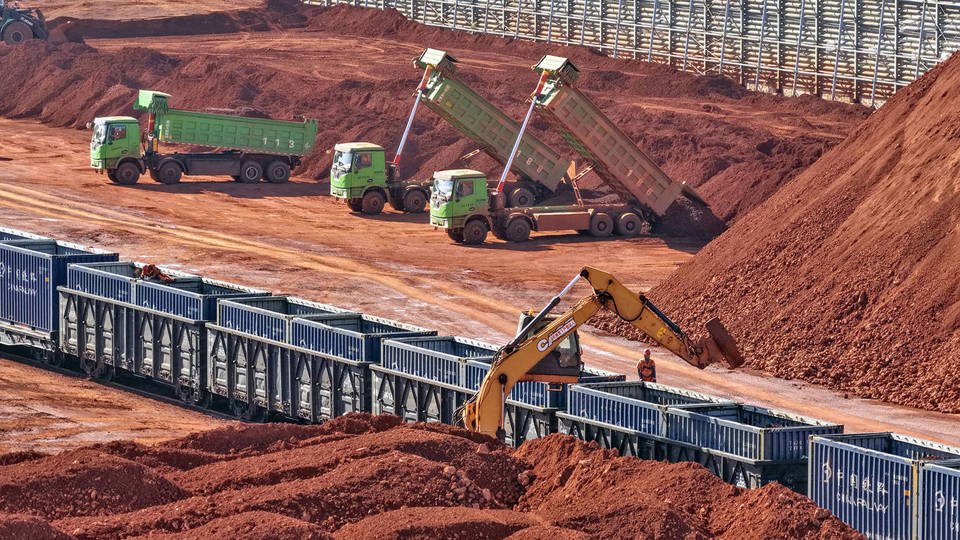
    1. Workers load imported bauxite onto trains at an ore dock in Yantai, China.


      Stringer/Feature China/Future Publishing via Getty Images


      Are China’s Rare Earths Really a Potent Weapon?

      Daniel Gros

      The available evidence indicates that Chinese rare-earth export restrictions would cost the West far less than often feared, though this cost is impossible to estimate precisely in advance. This is forcing prudence on both sides, to the disappointment of geopolitical hawks and the benefit of the global economy.

      argues that export restrictions can do only limited harm, though prudence is still in everyone’s interest.


    2. Dark smoke billows over destroyed vehicles near a fire following an overnight airstrike on the Shahran oil refinery in northwestern Tehran.


      AFP/Getty Images


      War and Climate

      Robert Muggah, et al.

      The war in Iran has underscored the dangers of relying on oil and gas imports. While it may revive demand for dirty fuels in the short term, over time it could also strengthen the case for clean-energy sources that reduce countries’ exposure to regional conflicts and maritime chokepoints.

      show why sacrificing rainforests and climate goals to strengthen energy security is no solution.


    3. Image for Will Europe Be as Unprepared as Ukraine Was?


      Ina Fassbender/AFP via Getty Images


      Will Europe Be as Unprepared as Ukraine Was?

      Tatyana Deryugina, et al.

      With Russia ramping up its hybrid war, Europe must choose. It can invest in its own defense, accept the trade-offs involved, and build credible deterrence, or it can continue to underspend, hope that diplomacy will suffice, assume that US protection will always be available, and tell itself that the war in Ukraine is a local affair.

      say that the main challenge is not merely to spend more, but to change entrenched habits of mind.


    A sobering new report from the United Nations Environment Programme (UNEP) warns that even if governments deliver on all their existing climate pledges, global warming could reach 1.8°C later this century. Meanwhile, a continuation of current policies could produce warming of 2.6°C by 2100. Either way, overshooting 1.5°C will expose the world to serious costs, including more frequent and intense heatwaves and bouts of heavy rain in many places. It will also bring us closer to breaching climate thresholds (or “tipping points”) beyond which lie far greater risks—such as destabilization of the polar ice caps in Greenland and West Antarctica.

    While the poorest countries will continue to be hit earliest and hardest, this summer has demonstrated that even rich countries like the United Kingdom are not prepared for the climate-driven risks that are already materializing, let alone the risks that await us. Temperatures will rise, and the negative effects of climate change will continue to mount until global GHG emissions are reduced to net zero and atmospheric concentrations stop growing. As long as they are still rising, so will the costs to us all. The net-zero target follows from physics, not ideology.

    The effects of overshooting 1.5°C will require much larger investments in adaptation and resilience, ranging from higher sea defenses to the development of more drought-resistant crop varieties. Such investment will become a much higher priority, and overall investment needs will become much greater than would have been the case had we met the Paris target.

    But there are limits to adaptation. Breaching major climate thresholds could lead to conditions so hostile that socioeconomic development itself would be reversed, forcing hundreds of millions of people to move despite whatever adaptation measures are in place.

    The longer it takes us to reach net-zero emissions, the larger the costs will be. Minimizing those costs will require more investment in rapidly cutting emissions through the deployment of renewables and electric vehicles, while making more rapid progress in hard-to-abate sectors such as maritime shipping and air travel.

    Although investment in the necessary technologies has been growing strongly, we still need a marked and sustained acceleration to phase out the polluting, inefficient practices that are making emissions rise further. Despite the International Energy Agency’s warning five years ago that limiting warming to 1.5°C would require that no new fossil fuel projects be launched, many producers have been expanding their exploitation of oil, gas, and coal reserves. As a result, managing climate change will require stranding even more fossil-fuel infrastructure, creating a real cost for investors who have backed dirty energy over renewables.

    One must also acknowledge the high costs associated with depending on international hydrocarbon markets. The competition for fossil fuels drives violent conflict, and price volatility has repeatedly caused severe economic crises. And yet, in most of the world, clean energy is now cheaper than dirty alternatives. Investing in clean, efficient technologies and infrastructure offers developing countries the chance to generate strong, sustainable, and resilient economic growth while cutting emissions.

    Nonetheless, the UNEP report points out that reversing the 1.5°C overshoot will require us to go beyond net zero to achieve negative emissions, meaning we will eventually need to remove much more carbon dioxide from the atmosphere than we add. Though we can and should expand natural carbon sinks, including forests, these are unlikely to offer the total capacity we will need. Closing the remaining gap therefore will require greater investment in artificial methods of extracting and storing billions of tons of atmospheric CO2.

    We should also examine carefully the potential of other geoengineering solutions, including those designed to reduce the total amount of solar energy reaching the Earth’s surface. Further research is needed, however, because these options come with significant risks and ethical implications. For example, cooling the planet while leaving high levels of CO2 in the atmosphere would acidify our oceans, with potentially dangerous consequences.

    The next few decades will be challenging. There will be many opportunities for investment and growth, but also serious dangers, owing to our hitherto slow response to the risks of climate change. We must come to grips with our new reality before we blow past yet another dangerous threshold.

    1.5C Exceed global Means Nicholas Stern Warming
    Share. Facebook Twitter Pinterest Tumblr LinkedIn Telegram Email
    Previous ArticleA New World Order Is Not Beckoning by Jeremy Adelman
    Next Article The £2.50 recipes I made on repeat at university
    Admin
    • Website

    Related Posts

    Alarm Bells in the Balkans by Carl Bildt

    September 24, 2026

    OpenAI, Anthropic bosses push UN for global terms on AI

    September 23, 2026

    What Xi Really Wants From Trump by Steve Tsang

    September 23, 2026
    Add A Comment
    Leave A Reply Cancel Reply

    Top Posts

    Subscribe to Updates

    Get the latest sports news from SportsSite about soccer, football and tennis.

    About us

    Welcome to **FinanceDailyTip.com**, your trusted destination for the latest financial news, market insights, and practical money tips.

    Our mission is to help readers stay informed about the ever-changing world of finance by delivering timely, accurate, and easy-to-understand content. Whether you're an investor, trader, entrepreneur, or simply looking to improve your financial knowledge, FinanceDailyTip.com is here to keep you updated.

    OUR PICKS

    Retirement Accounts Tie American Wealth to AI Stock Boom

    September 24, 2026

    This $267 Stock Could Be Your Ticket to Millionaire Status

    September 24, 2026

    Earnings Outlook Remains Upbeat: A Closer Look

    September 24, 2026
    Get Informed

    Subscribe to Updates

    Get the latest creative news from FooBar about art, design and business.

    © 2026 FinanceDailyTip.com. All Rights Reserved.
    • Privacy Policy
    • Terms and Conditions
    • Contact Us
    • About Us

    Type above and press Enter to search. Press Esc to cancel.