
Close Menu
financedailytip.com
    What's Hot

    Great Southern Bancorp (GSBC) Q3 2026 Earnings Call Transcript

    October 23, 2026

    Microsoft’s Mustafa Suleyman says its AI outperforms doctors on hard cases as he chases ‘medical superintelligence’

    October 23, 2026

    American Airlines (AAL) Q3 2026 earnings

    October 23, 2026
    Facebook X (Twitter) Instagram
    Trending
    • Great Southern Bancorp (GSBC) Q3 2026 Earnings Call Transcript
    • Microsoft’s Mustafa Suleyman says its AI outperforms doctors on hard cases as he chases ‘medical superintelligence’
    • American Airlines (AAL) Q3 2026 earnings
    • Bitcoin Price Drops 3% as Trump Iran Comments Add to Market AI Nerves
    • Starknet Voters Back Post-Quantum L1 Research
    • L’Oreal says weight loss drugs are impacting beauty and skin care sales
    • Circle Shareholder Targets Donald Trump’s Alleged Crypto Corruption in Lawsuit
    • Opinion꞉ The UK Needs a Workable Route to Regulated DeFi Access
    Facebook X (Twitter) Instagram
    financedailytip.com
    • Home
    • Business
      • Company News
      • Corporate Earnings
      • Entrepreneurship
      • Mergers & Acquisitions
      • Startups
    • Cryptocurrency
      • Altcoins
      • Bitcoin
      • Blockchain
      • DeFi
      • Ethereum
    • Economy
      • Global Economy
      • Government Policies
      • Inflation
      • Interest Rates
      • Recession
    • Finance
      • Banking
      • Economy
      • FinTech
      • Investing
      • Personal Finance
    • Forex
      • Economic Calendar
      • Forex News
      • Fundamental Analysis
      • Technical Analysis
      • Trading Signals
    • Investing
      • Dividend Investing
      • ETF Investing
      • Growth Investing
      • Portfolio Management
      • Value Investing
    • Stock Market
      • Asian Stocks
      • Earnings Reports
      • European Stocks
      • IPOs
      • US Stocks
    Friday, October 23
    financedailytip.com
    Home»Economy»Government Policies»Nature Can’t Wait by Mary Robinson
    Government Policies

    Nature Can’t Wait by Mary Robinson

    AdminBy AdminOctober 23, 2026No Comments6 Mins Read
    Facebook Twitter LinkedIn Telegram Pinterest Tumblr Reddit WhatsApp Email Copy Link
    Nature Can’t Wait by Mary Robinson
    Share
    Facebook Twitter LinkedIn Pinterest Email

    Although the wars in the Middle East and Ukraine are spurring governments to increase spending on defense and focus more on economic growth, it would be a mistake to postpone investments designed to protect nature. In fact, meeting internationally agreed targets could add up to $450 billion to annual global GDP by 2050.

    YEREVAN—In times of war, geopolitical turmoil, and fiscal tightening, it is tempting to view the defense of nature as a desirable but non-urgent goal—an objective that can be pursued when calmer times return. But we embrace this view at our peril.


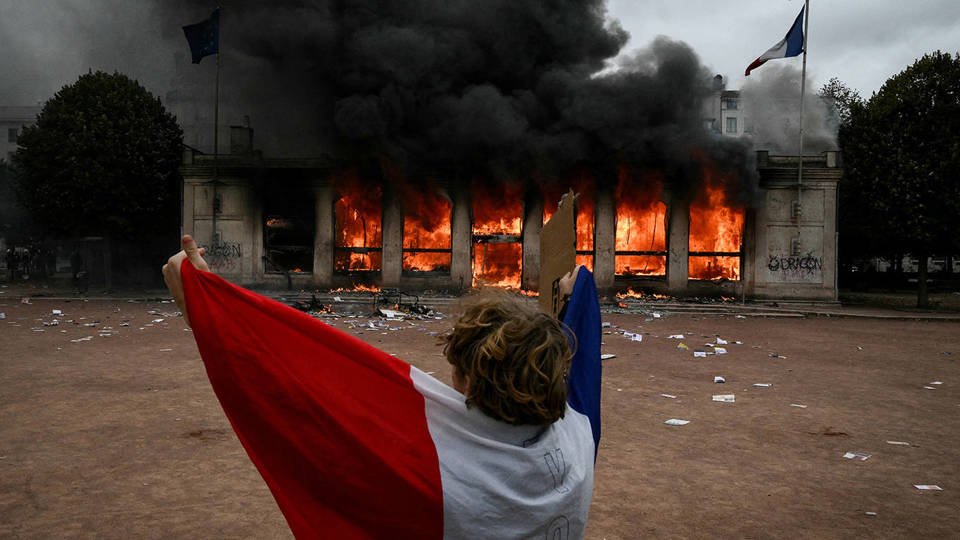
    1. A protester wrapped in a French flag stands in front of a burning building during a demonstration in France.


      Jeff Pachoud/AFP via Getty Images


      The Algorithm Driving French Student Protests

      Gabriela Ramos
      highlights an underreported factor that fueled the unrest now roiling the country.


    2. Workers with an assembly line of robots in a factory.


      Wang Jiang/VCG via Getty Images


      From AI Boom to Economic Bust

      Ian Goldin

      For generations, countries have escaped poverty by putting millions of people to work in factories and service industries. But as robots replace factory workers and AI takes over service jobs, the growth engines that have powered economic development across much of the world will be rendered obsolete.

      warns that the race for technological supremacy is fracturing societies and rules out international cooperation.


    3. People trade açaí berries at the Ver-o-Peso market in Brazil, seen from above.


      Anderson Coelho/AFP via Getty Images


      Brazil Cannot Afford Bolsonaro’s Spending Cuts

      Laura Carvalho & Joseph E. Stiglitz

      urge the country’s voters to defeat policies that would reverse hard-won progress on growth and poverty.


    As world leaders gather for the United Nations biodiversity and climate-change conferences this fall, they must remember that over half of global GDP depends on nature and the services it provides. Healthy soils underpin a $9.5 trillion global food industry, while forests support 1.5 billion livelihoods around the world. Healthy rivers help absorb floodwaters and sustain vital transportation networks. Nature is the backbone of the global economy, and protecting it must be a top national and international priority.

    Nature-related crises won’t wait until the wars in the Middle East and Ukraine are over. This summer’s sweltering drought in Europe caused $2-3 billion in crop losses, a double blow for farmers after the war-induced closure of the Strait of Hormuz caused fertilizer prices to surge by 71%. The combined effects of conflict and extreme weather have helped push global food prices to their highest levels since 2022.

    All told, scientists predict that a partial collapse of ecosystems could cost the global economy $2.7 trillion annually. Despite intense geopolitical instability, we cannot afford to undermine the natural systems on which our economies depend. The global goal to protect and conserve at least 30% of the world’s land and ocean by 2030, known as 30×30, is more important than ever.

    Protecting nature is an investment in resilience and solidarity. Resilience strengthens food and water security, and the capacity to weather climate shocks. It sustains livelihoods, public health, and long-term economic stability. The 30×30 goal, adopted by governments in 2022 under the landmark Kunming-Montreal Global Biodiversity Framework, recognizes that protecting nature is fundamental to providing these and other public goods.

    For example, kelp beds, mangroves, and marshes absorb carbon dioxide, while coral reefs help protect against storms and provide natural habitats for some of the world’s most diverse ecosystems. On land, forests regulate rainfall and support the livelihoods of local communities, and healthy soils retain water and nutrients that are vital to global food security and flood protection.

    Four years on, the world has made significant strides toward the 30×30 goal. New analysis from Campaign for Nature shows that 20% of land and inland waters are now designated as protected or conserved, and that fully delivering on existing commitments could increase this share to approximately 27% by 2030, closing much of the remaining gap.

    Progress at sea, however, has been much slower. Only 10% of the ocean is formally designated for conservation, and existing commitments would increase this to a mere 12% by 2030. Worse, Together for the Ocean’s latest Ocean Protection Gap Report finds that only 3.5% of the ocean is assessed as effectively protected, with harmful activities continuing in many areas that are supposed to be off limits.

    With just four years remaining, the world still has a chance to achieve 30×30, which is one of the defining global commitments of this decade. But what will it take to make up for lost time?

    For starters, governments must dramatically increase financing for nature. Delivering 30×30 will require approximately $100–180 billion annually, compared with current annual spending of $24 billion. But, again, this spending represents an investment, not just a cost. Achieving 30×30 could add up to $450 billion to annual global GDP by 2050 and support an estimated 4–7 million jobs.

    Policymakers at all levels urgently must move from talking about solutions to implementing them. As of May 2026, 116 countries had submitted commitments to protect up to 27% of land and inland water areas. But many have yet to follow up with mapped, costed, and financed plans. Commitments alone will not protect nature.

    Protecting more of the planet is only part of the challenge. Governments also must ensure that protected and conserved areas are well managed, deliver real benefits, and meaningfully preserve biodiversity. That requires long-term funding arrangements that can endure through changing economic and political cycles.

    There is no denying that the global outlook is uncertain. The wars in the Middle East and Ukraine are spurring governments to increase spending on defense and focus more on economic growth. But it would be a mistake to put nature on the back burner. Protecting natural systems is not just for the bees. Investing in their future is an investment in our own.

    Mary Nature Robinson Wait
    Share. Facebook Twitter Pinterest Tumblr LinkedIn Telegram Email
    Previous ArticleThe AI IPO Wave Is The Dot-Com Bubble’s Evil Twin. Anthropic’s Delay Just Proved It.
    Next Article Argentina’s Economic Chainsaw Massacre by Jeremy Adelman
    Admin
    • Website

    Related Posts

    Building the Economy Africa Needs by Yemi Kale

    October 22, 2026

    How Long Could You Wait for the S&P 500 to Recover From a 10% Drop?

    October 21, 2026

    The Algorithm Driving French Student Protests by Gabriela Ramos

    October 21, 2026
    Add A Comment
    Leave A Reply Cancel Reply

    Top Posts

    Subscribe to Updates

    Get the latest sports news from SportsSite about soccer, football and tennis.

    About us

    Welcome to **FinanceDailyTip.com**, your trusted destination for the latest financial news, market insights, and practical money tips.

    Our mission is to help readers stay informed about the ever-changing world of finance by delivering timely, accurate, and easy-to-understand content. Whether you're an investor, trader, entrepreneur, or simply looking to improve your financial knowledge, FinanceDailyTip.com is here to keep you updated.

    OUR PICKS

    Great Southern Bancorp (GSBC) Q3 2026 Earnings Call Transcript

    October 23, 2026

    Microsoft’s Mustafa Suleyman says its AI outperforms doctors on hard cases as he chases ‘medical superintelligence’

    October 23, 2026

    American Airlines (AAL) Q3 2026 earnings

    October 23, 2026
    Get Informed

    Subscribe to Updates

    Get the latest creative news from FooBar about art, design and business.

    © 2026 FinanceDailyTip.com. All Rights Reserved.
    • Privacy Policy
    • Terms and Conditions
    • Contact Us
    • About Us

    Type above and press Enter to search. Press Esc to cancel.