

NIL wealth does not affect the athlete alone—it can also reshape family relationships.
Student-athletes operate within interconnected relationships involving parents, coaches, teammates, agents and advisors, and financial success can amplify expectations from each group. Research suggests these pressures can affect family communication, relational boundaries and identity development.
Consider a 19-year-old suddenly earning more than anyone else in the household. Parents who previously made most financial decisions must adjust as the athlete assumes greater independence, while family members may seek financial support and friends or acquaintances may present investment opportunities. Moreover, sudden wealth can make young athletes targets for fraud and other forms of financial exploitation.
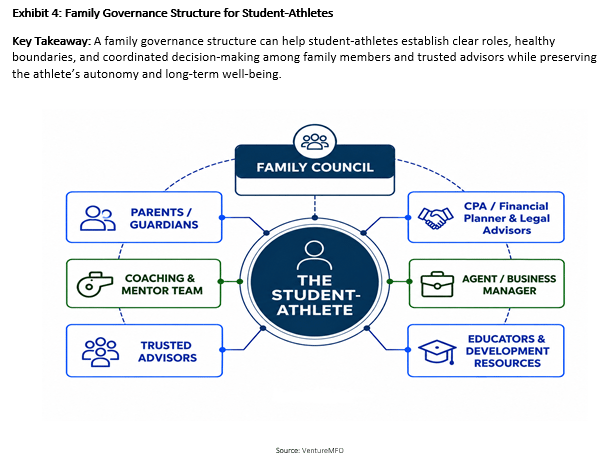
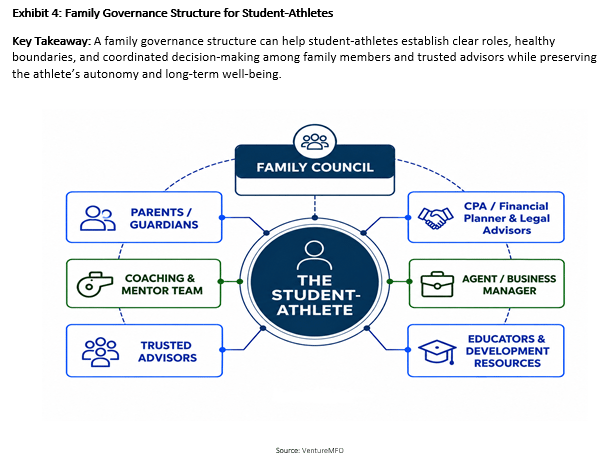
In these circumstances, clear roles and boundaries can help. Family governance need not involve a formal constitution or complicated legal structure; it can begin with practical questions such as who participates in major financial decisions, what role parents will play, how requests for financial assistance will be evaluated, who reviews proposed investments, and how professional advisors will communicate.
A family council or similar framework can provide a forum for these discussions, with support from financial planners, attorneys, agents, and other specialists. It should evolve as the athlete gains experience and assumes greater responsibility. The objective is coordinated decision-making, not control over the athlete’s finances.
Coordinate the Advisory Team
Substantial NIL income can bring a sports agent, attorney, accountant, financial planner and marketing professionals into an athlete’s life almost overnight. Each may offer valuable expertise, but uncoordinated decisions can undermine an otherwise sound plan.
The financial planner can maintain the integrated picture: expected receipts, liquidity needs, investment policy, insurance coverage and long-term objectives. The agent may negotiate commercial opportunities, legal counsel can address contracts and intellectual property, and tax professionals can evaluate reporting, entity structure, and multi-state obligations. Planners should establish clear responsibilities and a process for sharing information before major agreements or purchases are finalized.
The athlete should remain at the center of that process. Presenting alternatives, explaining trade-offs, and revisiting decisions as experience grows can make the advisory relationship part of the athlete’s financial education rather than a substitute for it.
From NIL Income to Lasting Wealth
NIL has given today’s elite student-athletes an opportunity previous generations largely did not have: the ability to accumulate meaningful wealth before their professional careers begin. That said, early income alone does not create long-term financial security.
Spending decisions, tax planning, investment strategy, insurance and family expectations all affect how much of an athlete’s earnings can be preserved. Those decisions are connected, particularly when income may be concentrated into only a few college years.
For financial planners, NIL offers a distinct planning challenge: Help clients with potentially substantial assets but limited experience build financial discipline before their peak earnings have passed. A plan grounded in the athlete’s goals and supported by coordinated specialists can give early financial success a purpose long after the playing career ends.
