
Close Menu
financedailytip.com
    What's Hot

    Worthing parents cutting basics at Christmas, soup kitchen warns

    November 26, 2026

    Is Nvidia Stock a Buy After Dell’s Record AI Backlog?

    November 26, 2026

    Your AI Startup’s Exit Is Being Shaped By The Deals You Sign Today

    November 26, 2026
    Facebook X (Twitter) Instagram
    Trending
    • Worthing parents cutting basics at Christmas, soup kitchen warns
    • Is Nvidia Stock a Buy After Dell’s Record AI Backlog?
    • Your AI Startup’s Exit Is Being Shaped By The Deals You Sign Today
    • Bitcoin Drops as Stocks Battle US Tariff Threat, Hot Inflation
    • Ethereum Foundation Picks Keccak-256 for Quantum, AI Security
    • Switzerland Clears 57 Jurisdictions for Crypto Tax Data Exchange
    • China’s Google Just Released Its Fast New AI Model for Free
    • AI Labs Likely Sitting on Cryptography ‘Bombshells’
    Facebook X (Twitter) Instagram
    financedailytip.com
    • Home
    • Business
      • Company News
      • Corporate Earnings
      • Entrepreneurship
      • Mergers & Acquisitions
      • Startups
    • Cryptocurrency
      • Altcoins
      • Bitcoin
      • Blockchain
      • DeFi
      • Ethereum
    • Economy
      • Global Economy
      • Government Policies
      • Inflation
      • Interest Rates
      • Recession
    • Finance
      • Banking
      • Economy
      • FinTech
      • Investing
      • Personal Finance
    • Forex
      • Economic Calendar
      • Forex News
      • Fundamental Analysis
      • Technical Analysis
      • Trading Signals
    • Investing
      • Dividend Investing
      • ETF Investing
      • Growth Investing
      • Portfolio Management
      • Value Investing
    • Stock Market
      • Asian Stocks
      • Earnings Reports
      • European Stocks
      • IPOs
      • US Stocks
    Thursday, November 26
    financedailytip.com
    Home»Economy»Government Policies»The Fossil-Fuel Endgame Doesn’t Require a COP Consensus by Gernot Wagner
    Government Policies

    The Fossil-Fuel Endgame Doesn’t Require a COP Consensus by Gernot Wagner

    AdminBy AdminNovember 26, 2026No Comments7 Mins Read
    Facebook Twitter LinkedIn Telegram Pinterest Tumblr Reddit WhatsApp Email Copy Link
    The Fossil-Fuel Endgame Doesn’t Require a COP Consensus by Gernot Wagner
    Share
    Facebook Twitter LinkedIn Pinterest Email

    ANTALYA—This year’s United Nations climate talks in Antalya, Turkey, broke up on Sunday without an agreement. Nearly 200 countries spent two weeks arguing about whether the final agreement could even mention phasing out fossil fuels. Apparently, it could not. Like last year’s conference in Belém, Brazil, which also failed to adopt a fossil-fuel roadmap, COP31 further reveals the limits of consensus-driven diplomacy.


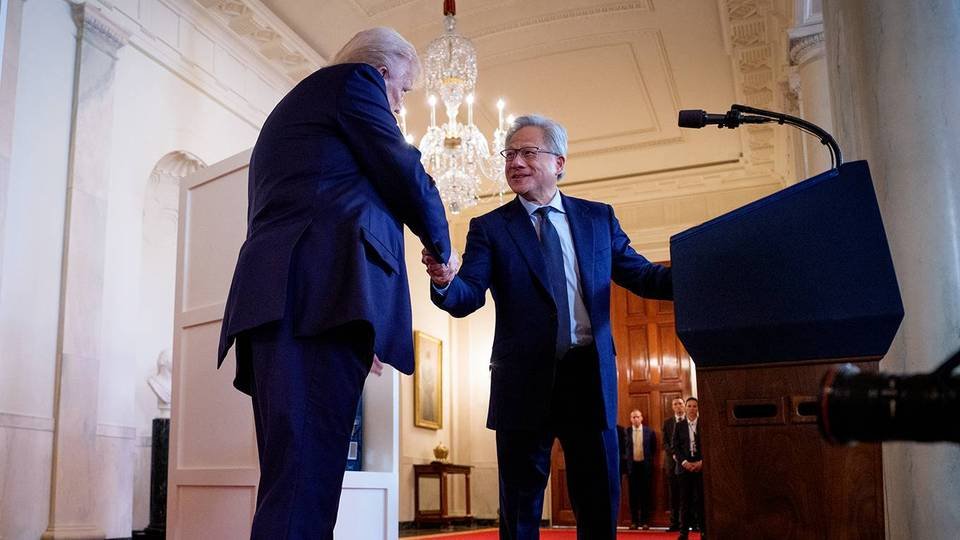
    1. Nvidia CEO Jensen Huang shaking hands with US President Donald Trump.


      Andrew Harnik/Getty Images


      Who Controls America’s AI Chokepoint?

      Carla Norrlöf

      The saga of Jensen Huang’s ouster and sudden return as Nvidia’s chief executive has exposed a paradox at the heart of American technological hegemony. While Nvidia’s AI chips give the United States leverage over China, the geopolitical power that Nvidia makes possible gives it leverage over the US.

      thinks the Nvidia saga has revealed a paradox at the heart of US technological hegemony.


    2. People walking by the COP31 sign in Antalya.


      Beyza Comert/Anadolu via Getty Images


      Effective Climate Action Requires Capable States

      Mariana Mazzucato

      For too long, discussions about the green transition have focused on mobilizing private finance, setting regulatory targets, and correcting market failures after the fact. But as important as these functions are, they have clearly proved to be insufficient.

      identifies state capacity as a key missing ingredient in the world’s response to global warming.


    3. Traders work on the floor of the New York Stock Exchange in New York City on November 17, 2026.


      Spencer Platt/Getty Images


      If the AI Bubble Is Bursting, the Fallout Will Be Severe

      Desmond Lachman

      With the S&P 500 following the tech-heavy NASDAQ into correction territory, even as Anthropic set a record with its initial public offering, this is a good moment to compare AI stock valuations with earlier asset-price bubbles. A look back at the dot-com boom and bust of the late 1990s offers ample cause for concern.

      sees three reasons to fear the macroeconomic effects of a sharp return to normal valuations in the sector.


    But these high-profile failures do not mean that the global response to climate change is stalled. On the contrary, the energy transition is moving faster than ever, even if it still is not fast enough.

    Consider the latest headline figures. In the past ten years, solar photovoltaic costs have fallen by about 90%, onshore wind by about 70%, and batteries by over 90%. Global clean-energy investment now tops $2 trillion per year. Electric-vehicle sales keep rising. Transportation accounts for roughly 60% of global oil demand, most of it from cars and trucks, and EVs are simply the better technology. They are more efficient, cost less to operate, and are increasingly cheaper to buy. Once that becomes obvious to consumers everywhere, oil demand won’t just plateau. It will fall off a cliff, perhaps as soon as within the next decade or two.

    Incumbents know this, even if their lobbyists won’t say it. ExxonMobil and Saudi Aramco have both pledged to reach net-zero emissions from their own operations by 2050. Though they have since gone quiet about these targets, cutting emissions to near-zero may happen anyway. Norway, after all, pursues a similar strategy, with Norwegians buying almost only EVs, and the grid operating fully on renewables. Shell’s influential forecasters see the world reaching near-zero emissions by 2100 even in their gloomiest scenario: the “Archipelago” of fragmented, nationalistic strategies that one finds today.

    But even if the end of the fossil-fuel era is a foregone conclusion, timing is everything. A world that reaches net-zero around 2100 will suffer average global warming of around 2.2–2.8° Celsius above pre-industrial levels, making irreversible tipping points all but inevitable. Getting there decades sooner will save many lives and livelihoods, not to mention trillions of dollars in climate-related damage.

    Speed matters for economic reasons, too. The energy shock from the Iran war has once again exposed how dependent many economies remain on globally traded, geopolitically volatile commodities. Call it “fossilflation”: the inflationary cost of tying prices, budgets, and national security to oil and gas markets that a handful of producers and conflicts can move at will. The fix for that macroeconomic exposure is the same as the fix for climate change: phase out fossil fuels.

    So, why do official talks keep stalling? There are two structural reasons. First, the UN process focuses on outcomes—targets, tons, and dates—while largely ignoring the root cause: the extraction and supply of coal, oil, and gas. Second, the process requires a consensus among some 200 countries, which gives governments (and companies) with the most to lose an effective veto over the final language.

    Fortunately, in April, a more promising alternative approach got its first real test. At the First Conference on Transitioning Away from Fossil Fuels in Santa Marta, Colombia (co-hosted by the Netherlands), 57 countries, representing roughly one-third of the global economy, showed up to discuss supply rather than only emissions. Such a coalition of the willing (akin to a “climate club” proposed by the late William D. Nordhaus) helps eliminate the consensus problem altogether. By definition, those in attendance are already doing more to accelerate the energy transition, and they know that their ranks can expand over time.

    There is ample precedent for this approach. In 1997, Canada led more than 120 countries to sign the Ottawa Treaty banning anti-personnel landmines, thereby making up for the failure of the UN’s consensus-bound disarmament forum (where China, Russia, and the United States each wielded a veto). A decade later, the Norway-led Oslo Process followed the same playbook and produced the 2008 Convention on Cluster Munitions. Neither treaty started with universal buy-in, but both established global norms anyway, constraining even non-signatories.

    Of course, removing the veto does not solve every problem. Markets will do much of the heavy lifting on cutting emissions, but they will not help poor countries adapt to the warming that is already locked in. That requires public money, which is where the lack of a global agreement hurts the most. By the UN Environment Programme’s latest count, wealthy countries provided only about $30 billion in public adaptation finance to developing countries in 2024, barely more than the previous year.

    Even if public climate finance can be mobilized at scale, other hard questions will remain: Who will stop permitting new extraction first? How can coal-dependent developing economies begin to shut down their coal assets in favor of renewables? And who compensates the workers left behind? It is one thing to agree on the final goal, but quite another thing to figure out the sequencing and financing.

    The countries with the least time to waste are pushing hardest. A bloc led by Pacific-island states, and accompanied by countries such as Colombia and Pakistan, is pressing for a legally binding Fossil Fuel Non-Proliferation Treaty, and the Santa Marta forum will reconvene in 2027 in Tuvalu (co-hosted with Ireland). A low-lying atoll country threatened by rising seas will host a summit on phasing out the fuels that threaten its very existence. The symbolism could not be starker.

    Despite the failure in Antalya, the question is not whether phasing out fossil fuels is the right goal. Investors, consumers, and even the oil majors’ own planners have already answered that. The question, rather, is whether a coalition of the willing can use policy to push markets toward a faster, fairer, and smoother transition than the traditional COP process can deliver.

    Consensus COP Doesnt Endgame FossilFuel Gernot Require Wagner
    Share. Facebook Twitter Pinterest Tumblr LinkedIn Telegram Email
    Previous ArticleThe Art of The Terrible Startup Name
    Next Article Where Development Cooperation Still Lives by Arancha González Laya
    Admin
    • Website

    Related Posts

    The Summit of Self-Promotion by Stephen S. Roach

    November 25, 2026

    AI Agents Could Make Big Tech Bigger by Max von Thun

    November 24, 2026

    Federal Reserve Board – Federal Reserve announces College Fed Challenge winners

    November 21, 2026
    Add A Comment
    Leave A Reply Cancel Reply

    Top Posts

    Subscribe to Updates

    Get the latest sports news from SportsSite about soccer, football and tennis.

    About us

    Welcome to **FinanceDailyTip.com**, your trusted destination for the latest financial news, market insights, and practical money tips.

    Our mission is to help readers stay informed about the ever-changing world of finance by delivering timely, accurate, and easy-to-understand content. Whether you're an investor, trader, entrepreneur, or simply looking to improve your financial knowledge, FinanceDailyTip.com is here to keep you updated.

    OUR PICKS

    Worthing parents cutting basics at Christmas, soup kitchen warns

    November 26, 2026

    Is Nvidia Stock a Buy After Dell’s Record AI Backlog?

    November 26, 2026

    Your AI Startup’s Exit Is Being Shaped By The Deals You Sign Today

    November 26, 2026
    Get Informed

    Subscribe to Updates

    Get the latest creative news from FooBar about art, design and business.

    © 2026 FinanceDailyTip.com. All Rights Reserved.
    • Privacy Policy
    • Terms and Conditions
    • Contact Us
    • About Us

    Type above and press Enter to search. Press Esc to cancel.