

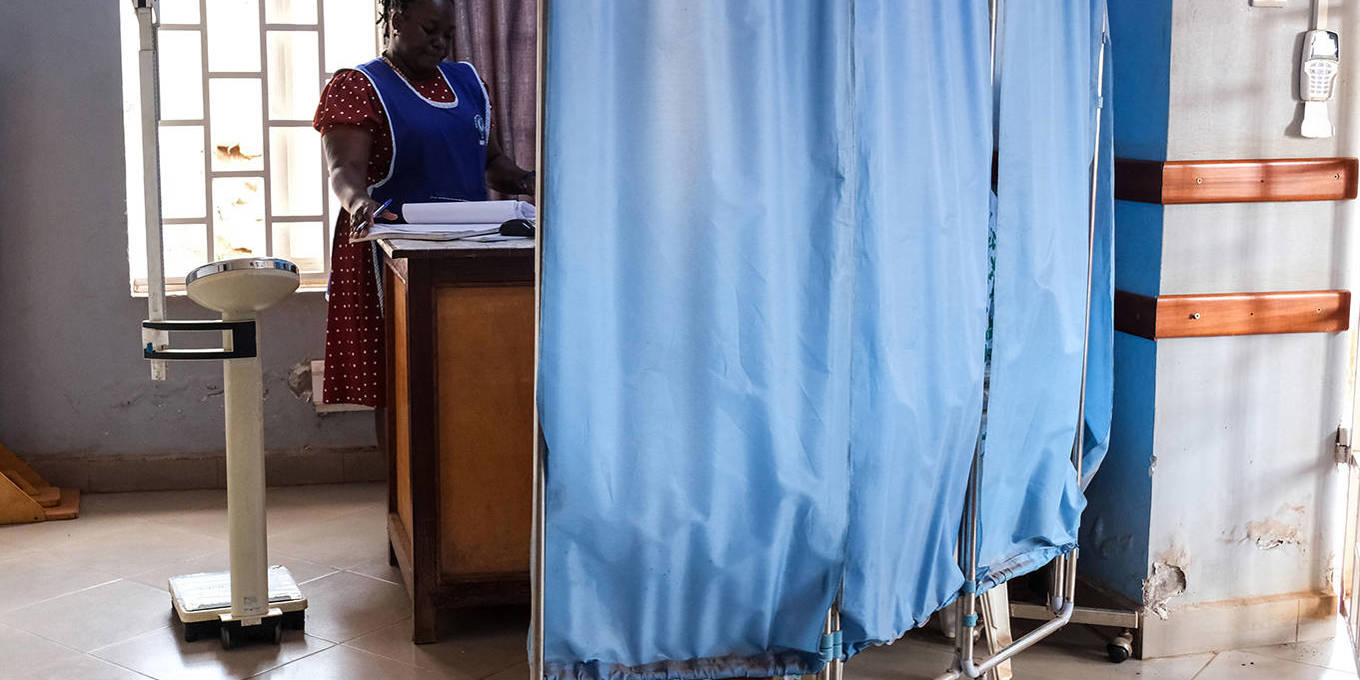
As aid flows decline, more countries are articulating a new vision in which health financing would build on national resources, answer to domestic priorities, and remain accountable to their own citizens. Such a change is long overdue, and it can be achieved by pursuing reforms in three areas.
ABUJA—Global health financing has long reflected good intentions but flawed incentives, with donor countries setting priorities and recipient governments learning to follow them. But this decades-old arrangement is now collapsing, giving us a rare opportunity to transform how we finance health nationally, regionally, and globally.
More countries are already articulating a vision in which health financing would build on national resources, answer to domestic priorities, and remain accountable to their own citizens. Health would be seen not as a cost but as an investment that drives growth and builds resilience, and the international system would become more closely aligned with national ambitions. Countries would collaborate where interests converge, with everyone recognizing that stronger national capacities ultimately strengthen collective preparedness and global stability.
Those calling for a change do not deny that global health financing has delivered real gains. Development assistance for health grew from $15 billion to $50 billion between 2000 and 2019, and with it came procurement systems, financing mechanisms, and collaborative infrastructure, proving what concerted global health cooperation can achieve. The system saved lives, improved health, and contributed to major development milestones.
But the same arrangements also entrenched dependency and concentrated power, consistently rewarding short-term outputs over long-term capacity. Accountability ran upward to donors, not downward to citizens.
Then came the 2025 disruptions to aid flows, multilateral institutions, and the assumptions underpinning them. What has followed is an overdue reckoning, and with it the question of how to develop something better.
The answer must include three distinct but mutually reinforcing elements. First, domestic financing must be the foundation, not a footnote. Although the process of increasing domestic spending for health will depend on a country’s starting point, all must pursue greater self-reliance. This requires tax reforms, budget prioritization, good governance, and public trust that government spending is delivering real benefits.
Debt relief is also critical. In heavily indebted economies, debt service has become a direct fiscal competitor to health spending, sometimes even exceeding total government allocations to health. Efforts to strengthen domestic financing must go hand in hand with tackling the structural constraints that continue to hinder it, and that requires removing the political obstacles to alleviating the debt burden.
None of this will be achieved in isolation. The scale of the challenge—from expanding fiscal space to rebuilding systems hollowed out by decades of aid dependence—points to the need for greater economic growth. Unlocking private investment and leveraging innovative approaches such as blended finance or debt-for-health swaps will be essential.
Second, official development assistance (ODA) and international financing must continue to provide support from the sidelines. The composition of overall development finance has shifted dramatically over the past decade, with bilateral flows falling by 6% and private creditor flows collapsing by 94% as multilateral finance rose by 124%.
Though it remains an integral part of the picture, ODA is under growing pressure. At an estimated $154 billion in 2026, total ODA is comparable to its 2015 level. Development assistance for health specifically is estimated to have stagnated at around its 2025 level of $38 billion. But even more important than funding cuts is how the remaining resources are used. External financing should fund only what cannot yet be covered domestically, and it should be concentrated where it is truly irreplaceable, namely in fragile settings and the lowest-income countries. Global resources and surge capacity to respond to humanitarian crises will remain necessary.
Nonetheless, most ODA should be strategic, force-multiplying, time-bound, and oriented toward accelerating a transition to national self-reliance. For many institutions and sovereign funders, this implies a radically different approach that cedes power and influence to regional and national institutions. Regional development banks, national public-health agencies, and pooled regional financing mechanisms can catalyze self-sufficiency.
Lastly, as principles of subsidiarity and sovereignty take center stage, the question of how to finance truly global collective public-health efforts comes to the fore. ODA was never designed for this role. It is politically contingent, fiscally unreliable, and poorly suited to financing functions whose value is universal.
Fortunately, middle-income countries’ capacity to contribute to the global system has grown markedly, and alternative options do exist. These include various global public investment models, assessed contributions, direct non-ODA budget lines, and solidarity-based levies. The most promising approach is to distribute contributions according to capacity, while moving decisively away from governance models where the ability to pay confers the power to decide. This is a long-term ambition, but one that health and finance leaders must work toward now.
The financing architecture for global health is already being reshaped. What remains to be seen is whether it will happen by design or by default. There is a clear need for a reset, with domestic resources brought to center stage; development assistance playing a strategic, time-bound, and genuinely transitional role; and global functions financed through mechanisms built on common interests and benefits.
Realizing this vision will require complementary action at both the national and international levels. At the national level, governments must recognize the role of citizens’ health in long-term development, resilience, and independence, and make the political choice to boost investment accordingly. At the same time, the international community, including sovereign partner countries and regional and global institutions, should move beyond the narrow, aid-based framing that has guided international health cooperation for decades and redirect political attention and non-aid resources toward shared priorities and mutually beneficial outcomes. Only then will global health financing truly reflect the world as it is now.
Additional co-authors include:
Mauricio Cárdenas, a former Minister of Finance and Public Credit of Colombia and Professor of Professional Practice in Global Leadership at Columbia University.
Gunilla Carlsson, the Co-Director of the Partnership for International Politics and Diplomacy for Health, and a former Minister for International Development Cooperation of Sweden.
