

The Bogleheads conference is the annual gathering of the followers of Vanguard founder Jack Bogle. This year’s conference took place at Green Valley Ranch in Henderson, Nev., on November 13 and 14.
I sat down to chat with longtime “Boglehead” Rick Ferri, who was president of the John C. Bogle Center for Financial Literacy from 2019 to 2022 and still runs the Bogleheads on Investing podcast. He is a CFA and a former Marine aviator who started on Wall Street in 1989. He built one of the first low-fee, index-based management firms, which grew to over $1.5 billion in assets. He now runs Ferri Investment Solutions, an advice-only RIA, and Core-4 Investing, a portfolio-education and model-portfolio offering, He is the author of five books, including “The Bogleheads’s Guide to Retirement Planning.”
This interview was edited for brevity and clarity.
Bob Pisani: The conference was a sellout—roughly 800 investors have shown up. What is top of mind for these Bogle disciples?
Rick Ferri: Many have been here before and they are here to validate what they’ve been following. There are also children of the people who have been Bogleheads for a while. If you’re looking for one thing that people are interested in, I think it’s probably taxes.
Why are taxes a hot topic?
Taxes are always a big draw, because it is a big driver of how much net you end up keeping.
There have been changes in the tax law. People are getting older and pulling out money from their portfolios. Should we do Roth conversions or not? They want advice on how to pass money to the next generation. So they are listening to the tax people and the estate planning people that we have here.
Can you summarize Bogle’s investment philosophy?
The philosophy is low-cost diversification. Don’t try to time the market. Keep your taxes low. Use broad market index funds when you can.
For many years, Bogleheads have largely adhered to a simple three-ETF portfolio consisting of Vanguard Total Stock Market, Vanguard Total Bond Market and Vanguard International. Is that still enough for a diversified portfolio? Is there room for other “tilts” like value and growth?
Diversification is the core philosophy. Strategy is how you do it in your portfolio, which may be different from how I do it in my portfolio. Using your own strategy will keep you disciplined. There are all kinds of innovations in strategy, including many different types of bond funds.
For the classic three-fund portfolio, I’d divide that up between equity and fixed income. On the equity side, Total Stock Market and Total International, roughly two-thirds U.S., one third international, that is the classic mix. You can try to “tilt” the portfolio toward value or small-caps, but you have to realize you are then deviating from the market.
For bonds, I think you can do better than Total Bond Market. The reason is that Total Bond Market is made up of a lot of government bonds, not so much corporate, no municipals, no TIPS. There’s other elements of the bond market that you might be able to add to your portfolio. For example, you have a taxable account and you’re in a high tax bracket. Do you want a Total Bond Market in your account, especially if you’re in a state that has a high state income tax? You’re better off with a state-specific, low-cost municipal bond fund in your taxable account, if it’s available.
 Bonds are an important diversifier for Bogleheads, but they have been poor performers recently. Is the 60/40 stock/bond portfolio still relevant?
Yes. Investing in bonds reduces the probability of a large loss, but it doesn’t eliminate it. Investing in bonds is not risk-free. You’re trying to get a real rate of return. Does it happen all the time? No, it doesn’t. But in the long term, it does happen. We just went through a period of time where bonds haven’t done well, but in the early 2000 to 2015 time frame bonds did really, really well because interest rates had come down so much.
U.S. stocks have dominated for 15 years, and index concentration in a few mega-cap tech names is high. Is there too much concentration in U.S. large-cap indexes?
I’m not concerned about mega cap technology stocks dominating the index. We’ve had many periods in the 200 year history of the U.S. market where one industry group dominated, and stocks still earned a good rate of return. I don’t believe this time is any different.
How do you address the sheer onslaught of “alt” investments like private equity and private credit? Do alts have a place in the average investment portfolio?
You have to realize that index investing has sucked all of the fees out of the active management side. Wall Street is trying to come up with something that they can make money on, and so they’re going to go to markets that maybe are not very liquid, private equity and so forth, and they’re going to try to “democratize” those markets and do it in a way that they can collect the fees that they’re no longer getting from the active funds. And I understand that. But do you have to buy that stuff? No.
How should retirees handle sequence-of-returns risk, where they may be drawing down their portfolio in a down market? Is the 4% withdrawal rule still right?
Bonds can play a role here. You’re just trying to reduce the probability of a bad downturn from equities. You develop this pillar of fixed income that you could draw down. Could be bond funds. Could be a bond ladder. Could be municipals. Could be TIPS. It could be a lot of things, but it’s not equity. You’re going to be able to draw that down if the equity market goes down.
At Ferri Investment Solutions, you provide hourly, as-needed investment advice. Why is that preferable over charging a percentage of assets under management?
I was a broker for 10 years, and then I was an asset under management manager for almost 20 years, and now I’m doing hourly. Hourly better aligns the advisor’s incentive with the client’s need. It’s a much better alignment of the advisor’s time with what the client pays.
Many RIAs use index funds in their practice, but what barriers still prevent mass adoption by the advisor community?
Complexity is job security. The bottom line is, many advisors will not put you in a three-fund portfolio because they’re too afraid that you are going to say, “Well, what do I need you for? All you’re doing is putting me in this three-fund portfolio, and then you’re not doing it, and you’re not trading it, you’re not changing anything.”
So what do the advisors do?
They create a Humpty Dumpty portfolio. Humpty Dumpty is the total stock market. It sits on the wall. The advisor comes along who charges 1%, knocks Humpty Dumpty off the wall, breaks them into eight different pieces: small cap values, small cap growth, small cap core, large cap value, whatever. Glues them all together and puts them back up on the wall. Now they have eight or nine or 10 funds in the portfolio, when all it’s doing is mimicking the total stock market. There is an illusion that value is being added.
What’s the future of financial innovation? ETFs and indexing were big financial innovations 30 and 50 years ago. What recent financial innovations will be important in the future?
I think that financial innovation is going to allow us access to the markets 24 hours a day, seven days a week, eventually. I think the tokenization of indexes are interesting. If you wanted to rebalance your portfolio over the weekend, you could use tokens, which are traded around the world, 24 hours a day, seven days a week.
How do you address financial nihilism? What do you say to young people who believe long-term investing is nonsense because they can’t afford a house or afford to get married and figure they should just bet it all on bitcoin?
I’m optimistic personally. I think global GDP is going to continue to grow. I think productivity is going to continue to increase. We’re going to continue to innovate, continue to have productivity, and that all equates to equity growth, so you should be investing in equity. Bitcoin has no intrinsic value. Equity has intrinsic value because it’s derived from that GDP growth, OK, which includes inflation, includes growth, and then there’s a dividend element on top of that as well. As for the high cost of housing, there’s going to be an awful lot of homes coming on the market if all those baby boomers are selling and nobody’s buying. Eventually, I think that the market has to come back down to an affordable level.
Thank you, Rick.
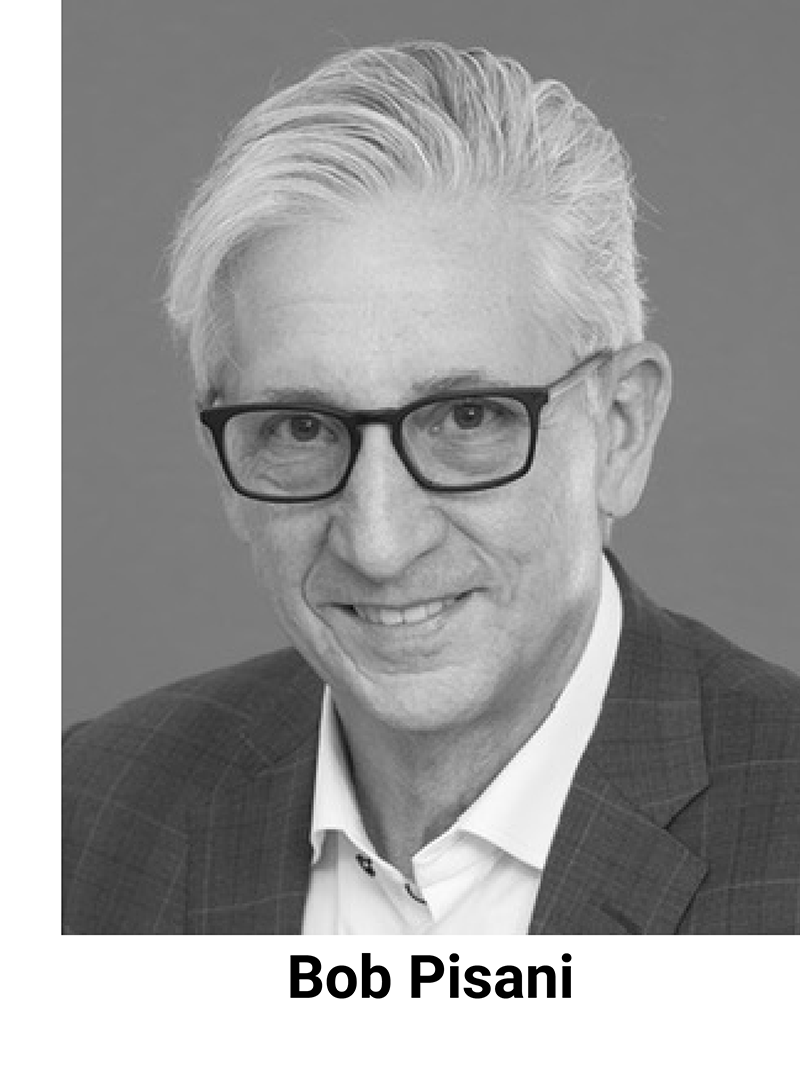
Bob Pisani was Senior Markets Correspondent for CNBC, where he worked for 35 years from 1990 to 2025. He is the author of “Shut Up and Keep Talking: Lessons on Life and Investing from the Floor of the New York Stock Exchange.”
