
Close Menu
financedailytip.com
    What's Hot

    The Return of the IMF to Latin America by Martín Abeles

    September 25, 2026

    UN Peacekeeping in Crisis by Adekeye Adebajo

    September 25, 2026

    From Booking Calls To Late Check-Ins, Dextr AI Raises $6.7M For Hotel AI Agents

    September 24, 2026
    Facebook X (Twitter) Instagram
    Trending
    • The Return of the IMF to Latin America by Martín Abeles
    • UN Peacekeeping in Crisis by Adekeye Adebajo
    • From Booking Calls To Late Check-Ins, Dextr AI Raises $6.7M For Hotel AI Agents
    • The Return of the German Question by Joschka Fischer
    • LAMDA Development S.A. 2026 Q2 – Results – Earnings Call Presentation (OTCMKTS:LMDFF) 2026-09-24
    • ‘We’re all broke’: Would you chase a friend for £5?
    • Retirement Accounts Tie American Wealth to AI Stock Boom
    • This $267 Stock Could Be Your Ticket to Millionaire Status
    Facebook X (Twitter) Instagram
    financedailytip.com
    • Home
    • Business
      • Company News
      • Corporate Earnings
      • Entrepreneurship
      • Mergers & Acquisitions
      • Startups
    • Cryptocurrency
      • Altcoins
      • Bitcoin
      • Blockchain
      • DeFi
      • Ethereum
    • Economy
      • Global Economy
      • Government Policies
      • Inflation
      • Interest Rates
      • Recession
    • Finance
      • Banking
      • Economy
      • FinTech
      • Investing
      • Personal Finance
    • Forex
      • Economic Calendar
      • Forex News
      • Fundamental Analysis
      • Technical Analysis
      • Trading Signals
    • Investing
      • Dividend Investing
      • ETF Investing
      • Growth Investing
      • Portfolio Management
      • Value Investing
    • Stock Market
      • Asian Stocks
      • Earnings Reports
      • European Stocks
      • IPOs
      • US Stocks
    Friday, September 25
    financedailytip.com
    Home»Economy»Recession»A Workable Social Contract for the Climate Transition by Jayati Ghosh & Owen Gaffney
    Recession

    A Workable Social Contract for the Climate Transition by Jayati Ghosh & Owen Gaffney

    AdminBy AdminSeptember 18, 2026No Comments7 Mins Read
    Facebook Twitter LinkedIn Telegram Pinterest Tumblr Reddit WhatsApp Email Copy Link
    A Workable Social Contract for the Climate Transition by Jayati Ghosh & Owen Gaffney
    Share
    Facebook Twitter LinkedIn Pinterest Email

    Economic insecurity and growing distrust in institutions are undermining governments’ ability to sustain support for climate action. To rebuild that support, they must show that climate policies can reduce household bills, create decent jobs, and ensure that the biggest emitters pay their fair share.

    NEW DELHI/STOCKHOLM—There is a paradox at the heart of climate politics. An overwhelming majority of people around the world want governments to tackle global warming. Yet in many of the largest economies, voters are backing parties that deny or downplay the climate crisis.


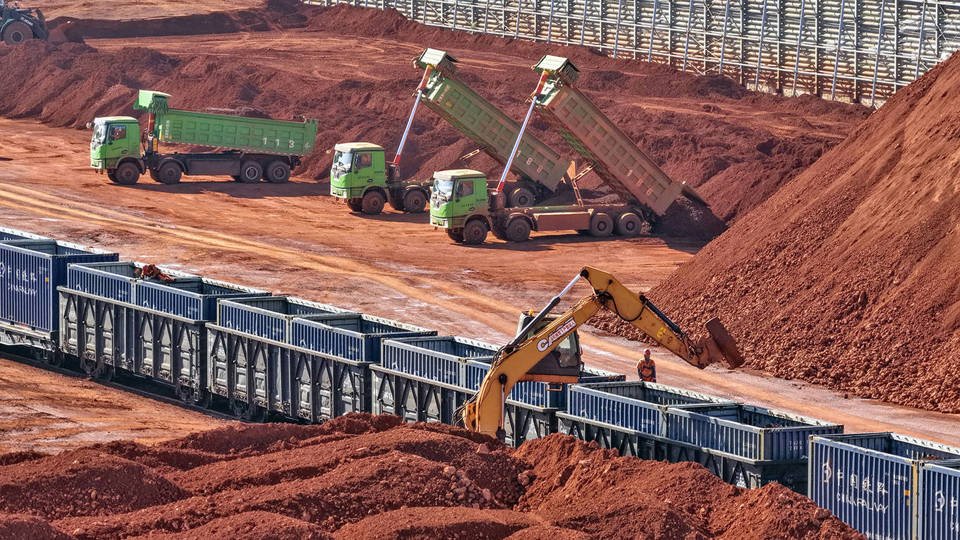
    1. Workers load imported bauxite onto trains at an ore dock in Yantai, China.


      Stringer/Feature China/Future Publishing via Getty Images


      Are China’s Rare Earths Really a Potent Weapon?

      Daniel Gros

      The available evidence indicates that Chinese rare-earth export restrictions would cost the West far less than often feared, though this cost is impossible to estimate precisely in advance. This is forcing prudence on both sides, to the disappointment of geopolitical hawks and the benefit of the global economy.

      argues that export restrictions can do only limited harm, though prudence is still in everyone’s interest.


    2. Dark smoke billows over destroyed vehicles near a fire following an overnight airstrike on the Shahran oil refinery in northwestern Tehran.


      AFP/Getty Images


      War and Climate

      Robert Muggah, et al.

      The war in Iran has underscored the dangers of relying on oil and gas imports. While it may revive demand for dirty fuels in the short term, over time it could also strengthen the case for clean-energy sources that reduce countries’ exposure to regional conflicts and maritime chokepoints.

      show why sacrificing rainforests and climate goals to strengthen energy security is no solution.


    3. Image for Will Europe Be as Unprepared as Ukraine Was?


      Ina Fassbender/AFP via Getty Images


      Will Europe Be as Unprepared as Ukraine Was?

      Tatyana Deryugina, et al.

      With Russia ramping up its hybrid war, Europe must choose. It can invest in its own defense, accept the trade-offs involved, and build credible deterrence, or it can continue to underspend, hope that diplomacy will suffice, assume that US protection will always be available, and tell itself that the war in Ukraine is a local affair.

      say that the main challenge is not merely to spend more, but to change entrenched habits of mind.


    The climate paradox is rooted in a profound sense of economic unfairness. Earlier this year, as Elon Musk briefly became the world’s first trillionaire, a survey conducted by Ipsos for Earth4All found that four in ten people across major global economies feared that their household would be unable to afford basic needs in the next 12 months. And in lower-income countries, economic insecurity is even more acute.

    Behind that figure lie four decades of broken promises. The neoliberal vision of wealth trickling down has failed to materialize, while the 2008 financial crisis and subsequent global shocks laid bare a system in which profits are privatized and risks are socialized, with the poor disproportionately shouldering the costs. The result has been deepening distrust in governments. Yet those governments are now asking people to trust their assurances that the current far-reaching transformation will be fairer than the last.

    The Earth4All survey highlights the scope of today’s crisis of legitimacy. Conducted among 13,516 people across 17 countries—G20 members plus Sweden, excluding China, Russia, and Saudi Arabia—the survey found that 70% believe economic inequality in their country is too high, and 65% say the economic system is “rigged to benefit the rich and powerful.” More than two-thirds want major changes to the economic system, compared with just 8% who disagree.

    These responses, validated by lived experience, are entirely rational. In a world where wealth has become spectacularly concentrated, allowing large corporations and the ultra-wealthy to skew regulation, taxation, and public spending in their favor, the sense that the rules are written by and for the powerful is well founded. The same political and economic arrangements that generate extreme inequality also undermine governments’ ability to provide affordable energy, decent jobs, public services, and resilience against climate shocks.

    As a result, the mandate for climate action remains conditional. Across the countries surveyed, 54% support strong government action to reduce greenhouse-gas emissions even if it leads to higher prices. This includes the United States, despite President Donald Trump’s dismantling of key climate policies. But support falls among lower-income groups and right-leaning respondents in all 17 countries.

    Climate policies cannot win social and political support if they let the wealthy, who produce the most emissions, maintain business as usual. The challenge is compounded by the rapid erosion of social cohesion, with two in three respondents (67%) saying their country is more divided than it was a decade ago. Political divisions are the most pronounced: 71% see serious tensions between supporters of different political parties, well ahead of tensions between high- and low-income earners (63%), immigrants and native-born citizens (62%), and people concerned about climate change and those skeptical of it (53%).

    Societies marked by such divisions struggle to make collective decisions, share costs, and pursue ambitious projects whose benefits may take years or decades to materialize. Our ability to confront the defining challenges of this century, from cutting emissions and reversing ecological breakdown to managing the disruptive effects of AI, rests on public institutions that can make long-term investments, act fairly, and command sufficient trust to withstand the inevitable backlash.

    Trust, however, is in dangerously short supply these days. Fewer than one in three respondents (31%) believe their government can be trusted to make decisions that will benefit the majority of people 20 or 30 years from now.

    Democracy nevertheless retains considerable support, with 68% of respondents saying that a political system in which leaders are chosen through free and fair elections is the best way to govern their country. But that legitimacy is far from assured: 40% of respondents believe their country would be better off with a strong leader unconstrained by parliament and elections; in several middle-income countries such as Indonesia, India, South Africa, and even Brazil, that figure rises above 50%.

    Ultimately, democracy’s survival depends on whether it improves people’s lives. It is unconscionable that, even as societies have become vastly wealthier, so many people—including in the world’s richest countries—remain economically insecure. Democracies must offer the least well-off a genuine stake in the future through affordable clean energy, decent wages, universal public services, and resilience to economic and climate shocks. They must also ensure that the biggest emitters pay their fair share of the climate transition’s costs.

    The climate mandate will endure only if the transition is demonstrably fair. When clean energy cuts household bills, public investment creates secure jobs, essential services are protected, and the wealthiest and biggest emitters pay what they owe, what is there to resist? Rather than trying to manufacture consent for climate action, governments need to forge a social contract capable of sustaining it.

    Climate contract Gaffney Ghosh Jayati Owen Social Transition Workable
    Share. Facebook Twitter Pinterest Tumblr LinkedIn Telegram Email
    Previous ArticleThe UN’s Credibility Test by Maíra Martini
    Next Article Why we bought our first home with a 100% mortgage – despite the risks
    Admin
    • Website

    Related Posts

    Trump’s 21st-Century Mercantilism by Anne O. Krueger

    September 24, 2026

    Europe in a Multi-Aligned World by Véronique Chabourine

    September 23, 2026

    Spain battles climate change on several fronts

    September 22, 2026
    Add A Comment
    Leave A Reply Cancel Reply

    Top Posts

    Subscribe to Updates

    Get the latest sports news from SportsSite about soccer, football and tennis.

    About us

    Welcome to **FinanceDailyTip.com**, your trusted destination for the latest financial news, market insights, and practical money tips.

    Our mission is to help readers stay informed about the ever-changing world of finance by delivering timely, accurate, and easy-to-understand content. Whether you're an investor, trader, entrepreneur, or simply looking to improve your financial knowledge, FinanceDailyTip.com is here to keep you updated.

    OUR PICKS

    The Return of the IMF to Latin America by Martín Abeles

    September 25, 2026

    UN Peacekeeping in Crisis by Adekeye Adebajo

    September 25, 2026

    From Booking Calls To Late Check-Ins, Dextr AI Raises $6.7M For Hotel AI Agents

    September 24, 2026
    Get Informed

    Subscribe to Updates

    Get the latest creative news from FooBar about art, design and business.

    © 2026 FinanceDailyTip.com. All Rights Reserved.
    • Privacy Policy
    • Terms and Conditions
    • Contact Us
    • About Us

    Type above and press Enter to search. Press Esc to cancel.