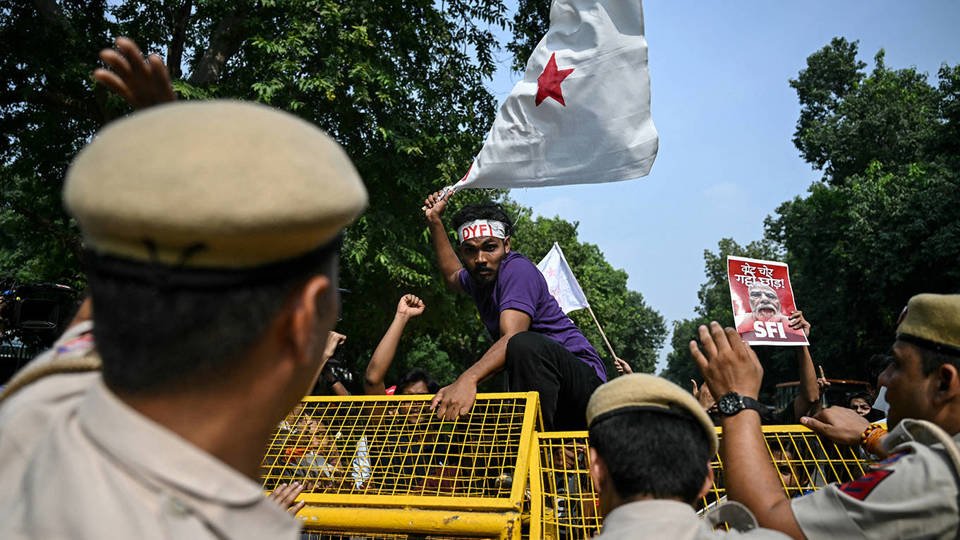
Following a “special intensive revision” that struck 130 million voters from the electoral rolls, India’s youth have mounted large-scale protests against the Election Commission. Given the convergence of protests with the formal political opposition, the Commission is unlikely to avoid accountability for mass disenfranchisement.
NEW DELHI—Following a summer of discontent, India has entered an autumn of political crisis. During a scorching June and July, a youth-led movement, backed by Rahul Gandhi’s opposition Congress party, took to the streets to demand education reform. So potent was the movement that the central government, led by the Bharatiya Janata Party (BJP), was forced to make significant concessions, including the resignation of Union Education Minister Dharmendra Pradhan. But Indians are not finished: they have now set their sights on the electoral system.


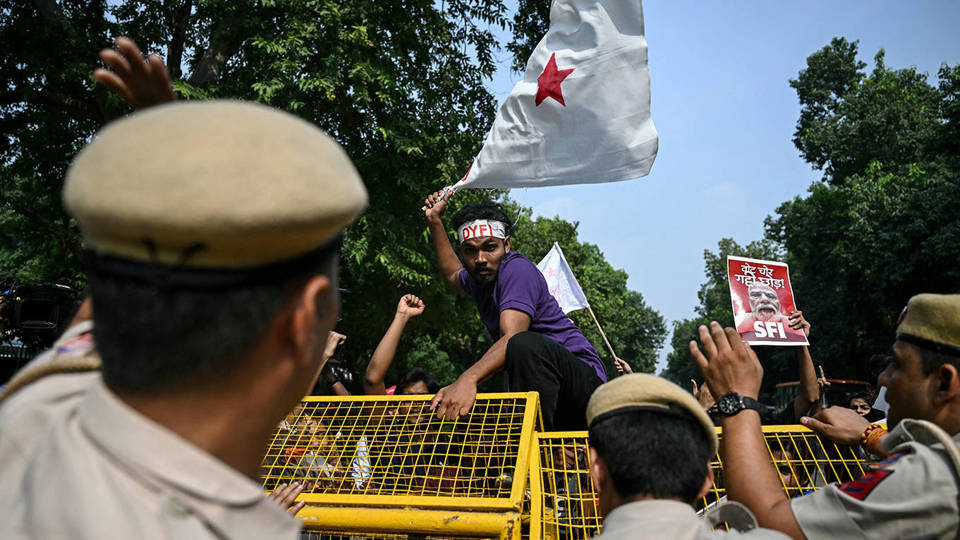

NEW DELHI—Following a summer of discontent, India has entered an autumn of political crisis. During a scorching June and July, a youth-led movement, backed by Rahul Gandhi’s opposition Congress party, took to the streets to demand education reform. So potent was the movement that the central government, led by the Bharatiya Janata Party (BJP), was forced to make significant concessions, including the resignation of Union Education Minister Dharmendra Pradhan. But Indians are not finished: they have now set their sights on the electoral system.