






Opinions expressed by Entrepreneur contributors are their own.
Key Takeaways
- Keller and Carlisle spent nearly two years building Rorra before making their first sale.
- The company used AI to poke holes in the launch strategy for Rorra’s $249 water pitcher, then adjusted the plan based on the feedback.
- Rorra did eight figures in sales in its first year, and Keller says the company expects sales to grow two to three times this year
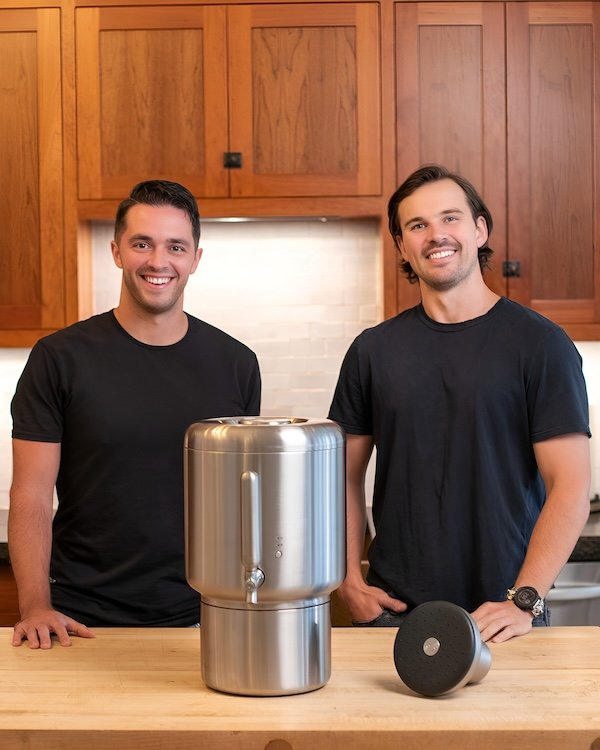
A basic water filter pitcher typically costs around $20 to $40. Rorra, a startup water filtration company known for its stainless-steel countertop system, is asking $249 for its new version.
That’s a lot of money for a water pitcher. So what makes founders Brian Keller and Charlie Carlisle think people will pay a premium for it?
Part of their pitch is that this isn’t your typical plastic pitcher. Rorra’s version is made from borosilicate glass and stainless steel, and uses the same proprietary technology as the company’s larger countertop system.
Keller and Carlisle recently joined the One Day with Jon Bier podcast to talk about the new product and what they’re doing differently the second time around as founders.

Going all in before they had a product
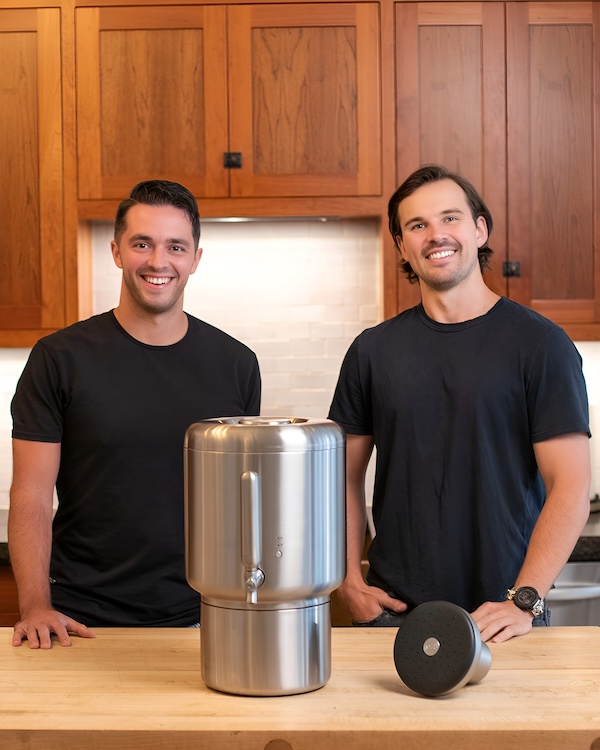
Keller and Carlisle had one advantage when they started Rorra. They’d done this before. The two previously worked together at Love Your Melon, the apparel brand known for donating hats to children battling cancer, so they had already been through the process of building and exiting a company.
But Rorra required a different kind of sacrifice. They didn’t have a finished product. They didn’t have sales. What they had was enough early research to convince themselves there was a business worth pursuing.
Then came nearly two years of working full-time without making a sale.
There were plenty of moments when the plan looked shaky. One early prototype of Rorra’s countertop filtration system was roughly one-and-a-half times the size of the final product. Carlisle described it as a giant “Stanley Cup-looking thing.”
A bigger problem came when they thought they were nearing launch. Their engineering firm told them the product needed another three or four months of work.
Keller said they had to “remodel the whole business” and make sure they had enough cash to get to launch.
Rorra eventually launched its countertop filtration system, followed by a filtered showerhead. Keller said the company did eight figures in sales in its first year and expects sales to grow two to three times this year.
That growth has given them room to expand beyond the products that built the business. Their latest invention is the $249 pitcher.
Why pay $249 for a water pitcher?
The pitcher is Rorra’s attempt to take the filtration technology from its larger countertop system and put it into a more portable form. But Keller and Carlisle didn’t want to make another cheap, plastic pitcher.
“Go back to the 1950s refrigerators,” Carlisle said on the podcast. “They used to last for 40, 50 years. How do we get back to that really wonderful, durable, and oftentimes self-serviceable culture?”
The difference is in the materials used. The 13-cup Rorra version is made from borosilicate glass and stainless steel, with no plastic touching the filtered water. Rorra says its filter reduces PFAS, lead, microplastics, and dozens of other contaminants. It also lasts for up to 200 gallons.
Using AI
But durability doesn’t necessarily make consumers want to spend $249 on a pitcher. Keller and Carlisle still had to figure out how to sell it.
That’s where Keller tried something unusual. While working on the launch strategy, he fed the plan into AI. But rather than ask whether it was a good plan, he told the AI it had already bombed.
Keller said he built the launch plan himself, fed it into AI, and told it: “This was the plan. It completely failed. Tell me where we went wrong.”
The exercise identified some potential problems. Keller said AI warned that Rorra wasn’t a big enough brand to sustain the lengthy pre-launch period he had envisioned and suggested the company was trying to communicate too many selling points at once.
So they changed the plan, shortening the pre-launch period and narrowing the message.
The strategy appears to have worked. Rorra says the first batch of pitchers sold out, with a second batch scheduled to ship in October.
Beyond the pitcher
The pitcher may be Rorra’s newest product, but Keller and Carlisle are already thinking beyond what sits on the kitchen counter. They see an opportunity to build a water filtration brand that follows customers outside the home.
“Right now, when you go to fill your water bottle up at an airport or the gym, that brand is not the same brand that you can buy for your house and vice versa,” Carlisle said.
Rorra plans to keep developing consumer products, but Carlisle said the bigger opportunity could be creating a “fully integrated, filtered water platform that transcends environments.”
Rorra is also entering a new stage as a company. Keller and Carlisle have relocated the business to Austin, where they plan to build out their team and work together in person after running the company remotely for its first three years.
Keller believes this stage can be particularly dangerous for a fast-growing company.
“Businesses go to die between 20 to 50 million,” he said. To get beyond that point, he said, founders need to keep innovating while hiring the right people and maintaining the speed that got them there in the first place.
For now, Keller and Carlisle have a more immediate test in front of them: finding out how many people really are willing to spend $249 on a water pitcher.
Key Takeaways
- Keller and Carlisle spent nearly two years building Rorra before making their first sale.
- The company used AI to poke holes in the launch strategy for Rorra’s $249 water pitcher, then adjusted the plan based on the feedback.
- Rorra did eight figures in sales in its first year, and Keller says the company expects sales to grow two to three times this year
A basic water filter pitcher typically costs around $20 to $40. Rorra, a startup water filtration company known for its stainless-steel countertop system, is asking $249 for its new version.
That’s a lot of money for a water pitcher. So what makes founders Brian Keller and Charlie Carlisle think people will pay a premium for it?
Part of their pitch is that this isn’t your typical plastic pitcher. Rorra’s version is made from borosilicate glass and stainless steel, and uses the same proprietary technology as the company’s larger countertop system.