

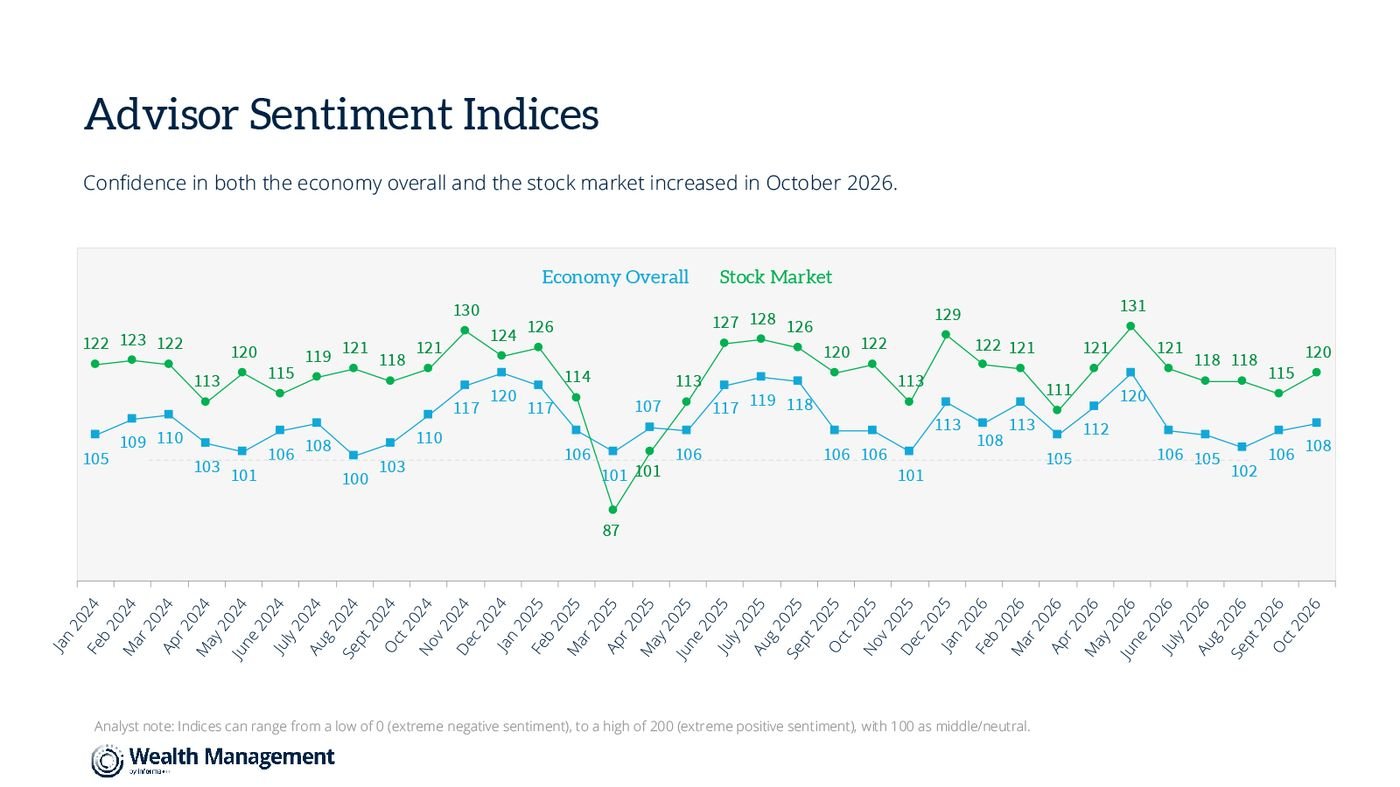
Financial advisors’ faith in the stock market and the economy rose in October to its highest level in four months. The Advisor Sentiment Index on the markets came in at 120, five points higher than September’s reading, while sentiment around the economy rose two points to 108.
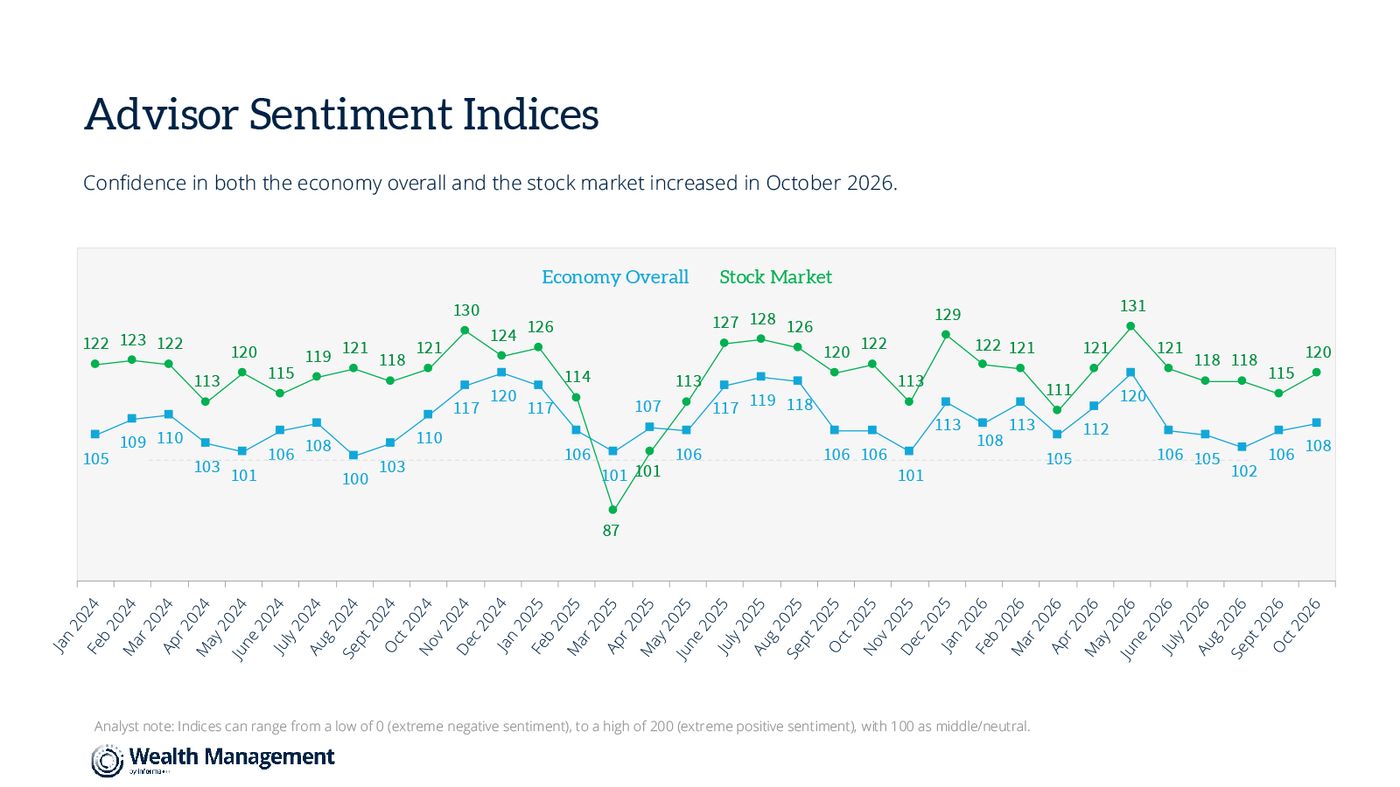
Both readings are relatively flat compared to one year ago. Advisors were surveyed prior to the market volatility in recent weeks stemming from fallout in the technology sector.
The WMIQ Advisor Sentiment Index seeks to gauge financial advisors’ views on the current and near-term prospects for the economy and the stock market. An index reading above the neutral baseline of 100 indicates positive sentiment, while a reading below 100 indicates negative sentiment.
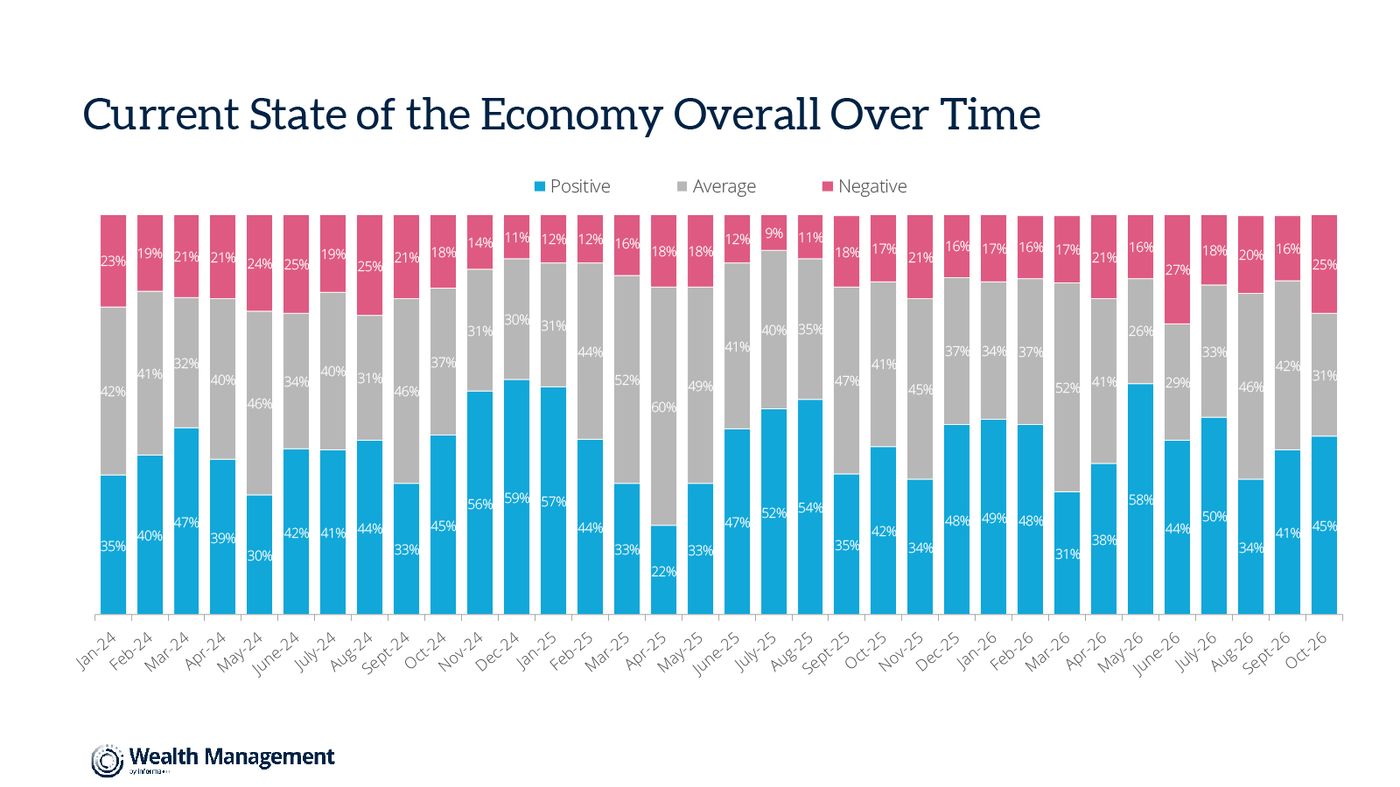
As for the economy, 45% of advisors have a positive view, while one in four (25%) hold a negative view. Advisors are increasingly polarized on the state of the economy, with both positive and negative responses rising over the past three months, while those with a neutral view have declined.
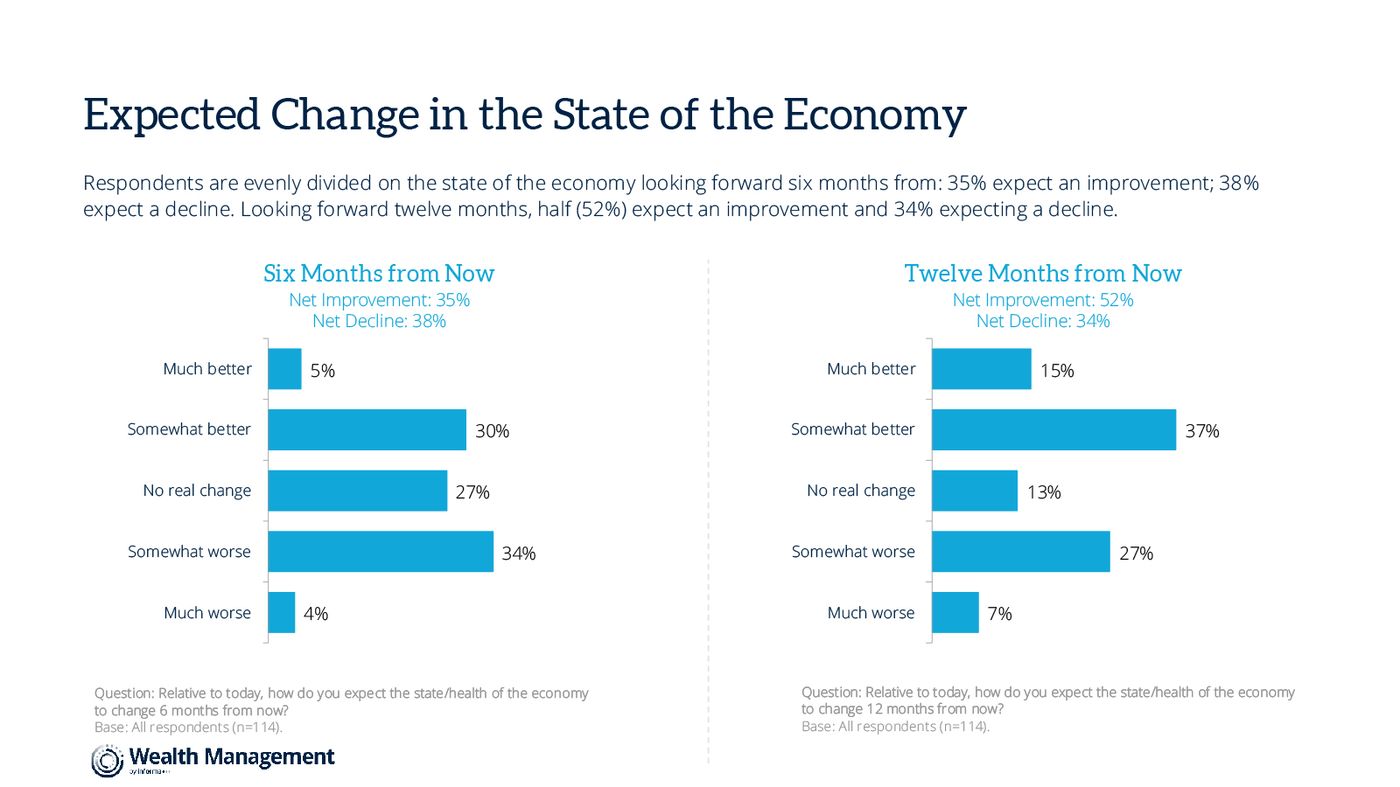
Respondents are evenly divided on the state of the economy looking forward six months: 35% expect an improvement; 38% expect a decline. Looking forward twelve months, half (52%) expect an improvement and 34% expect a decline.
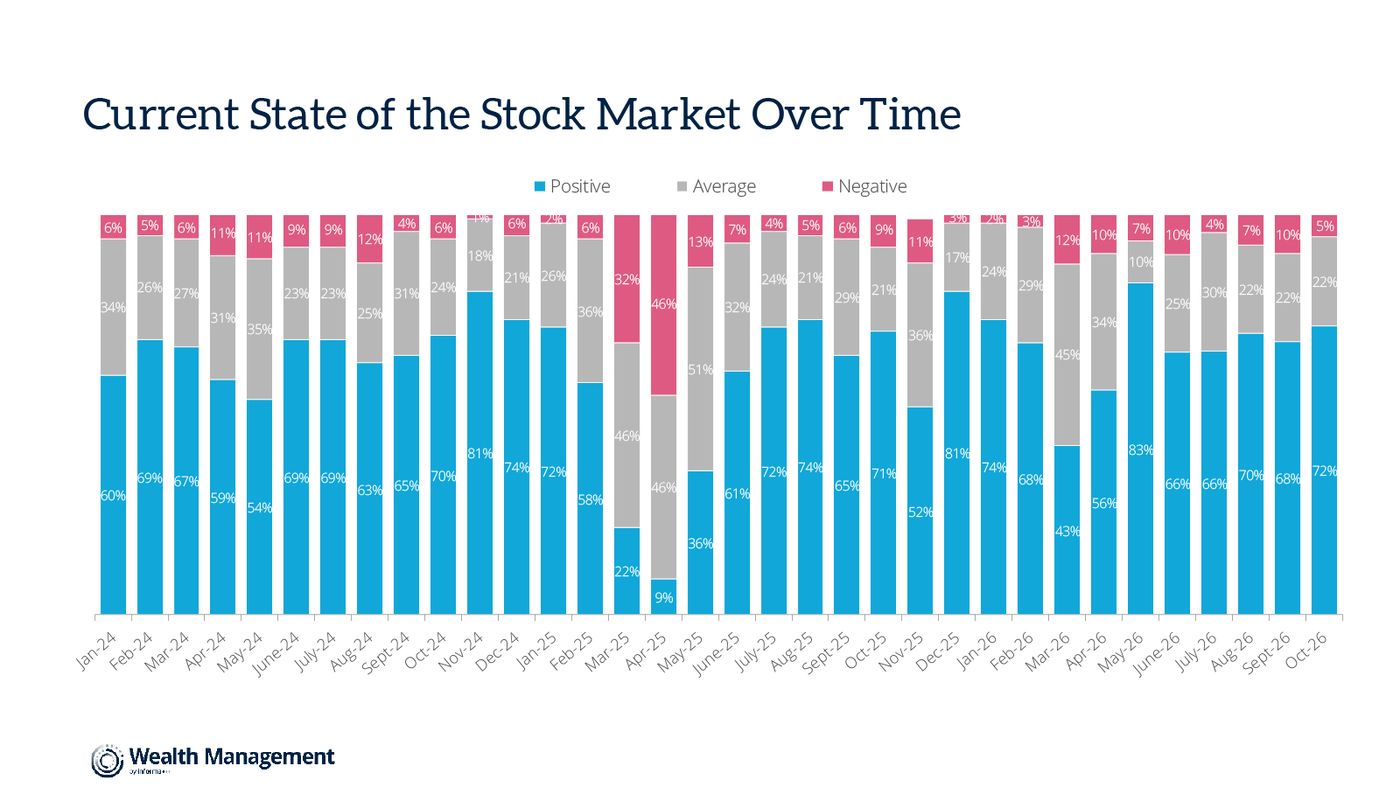
There is a disconnect between advisors’ views on the economy versus the stock market. Very few advisors (5%) hold a negative view of the markets, while those with a positive view (72%) are at their highest level in four months. It remains to be seen if November’s market developments will impact their overall view.
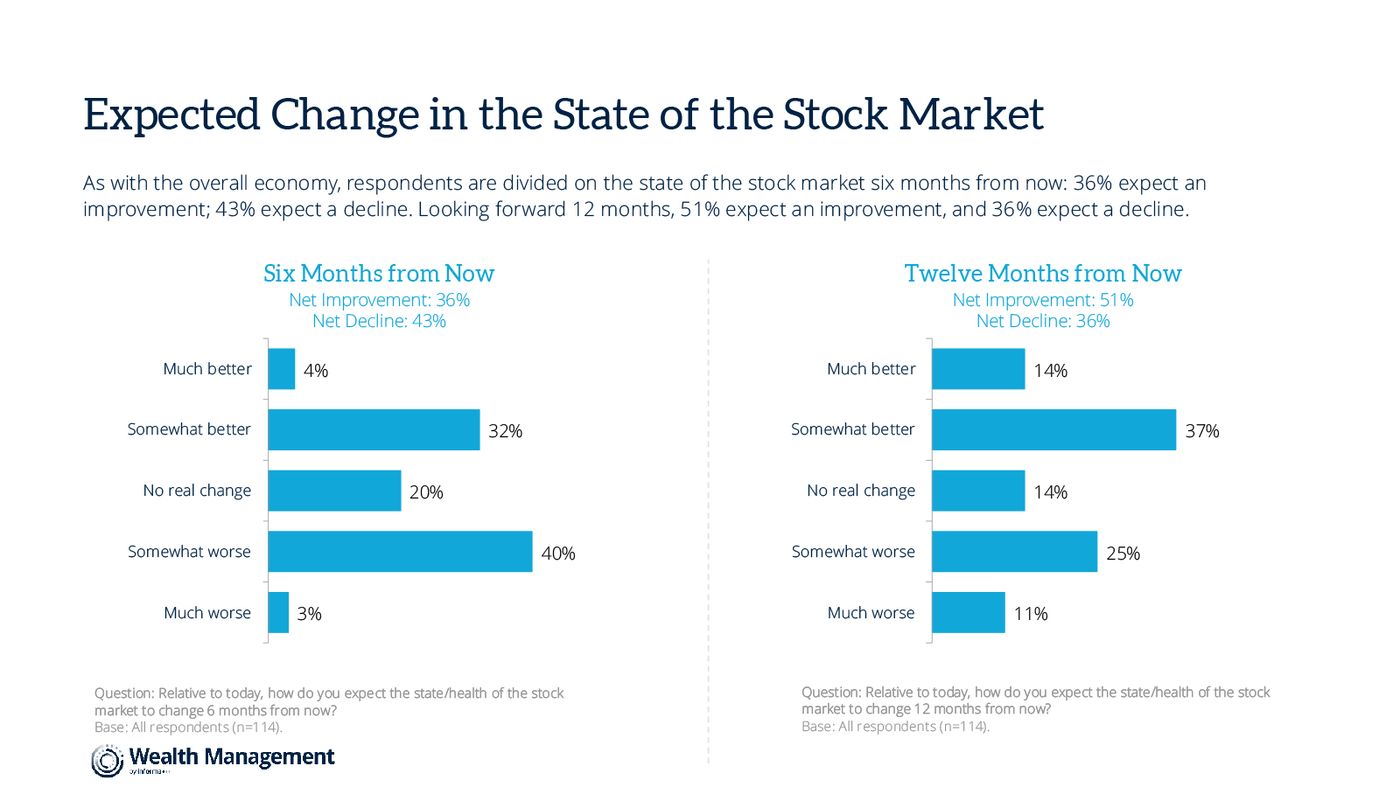
As with the overall economy, respondents are divided on the state of the stock market six months from now: 36% expect an improvement; 43% expect a decline. Looking forward 12 months, 51% expect an improvement, and 36% expect a decline.
In the open-response portion of the survey, advisors cited persistent inflation, elevated energy prices and interest-rate uncertainty as significant threats to economic stability, even as many said easing geopolitical conflicts, particularly in Iran, and declining oil prices could help moderate those headwinds.
Methodology, data collection and analysis by Wealth Management and Informa Engage. Data collected October 1-31, 2026. The methodology conforms to accepted marketing research methods, practices, and procedures. Respondents are asked for their view on the economy and the stock markets both currently, in six months and in one year. Responses are weighted and used to create an index tied to a neutral value of 100. Over time, the ASI will provide directional sentiment of retail-facing financial advisors.
