

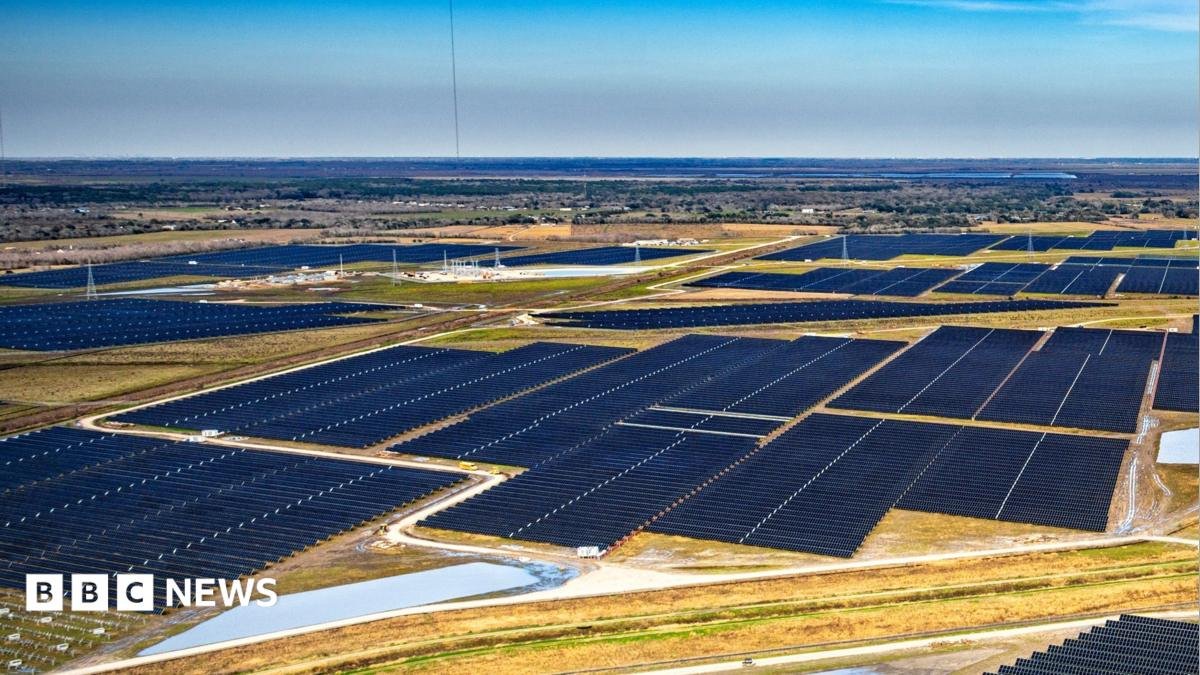
On hot afternoons, when demand for power peaks, solar is now regularly supplying around a third of the electricity used across Texas, says Mark Stover, executive director of the Texas Solar and Storage Association.
He says that the solar boom is being driven by two main things. Firstly, it is cheap and quick to connect solar farms to Texas’ power grid, which is separate to the rest of the US. Secondly, Texas has a huge and growing appetite for electricity, driven by a burgeoning population.
Between 2015 and 2025, Texas’s population increased by 15.8%,, external making it one of the fastest-growing states in the nation.
“We need a whole lot of power in Texas, and we need it quickly,” Stover says.
Solar has also become inexpensive. James Scott, vice president of project development at OCI, says the technology has had years of small manufacturing gains that brought the price down to the point where it is now the cheapest way to generate power in the state.
“No one would have believed that 20 years ago,” Scott says.
Once a project is built, he says, the price of the electricity it produces can be fixed for decades, since the fuel, sunlight, is free.
“We’ll charge you $40 a megawatt hour for the next 25 years,” Scott says, adding that large buyers such as Amazon and Apple value being able to lock in a price for that long.
By contrast, new coal plants in the US produce power at nearly $90 megawatts per hour, says the Energy Information Administration.
Farmers have become central to that growth because solar developers need large stretches of flat land.
Stover says the industry is now paying out multigenerational income to families through leases that typically run 25 to 30 years and rise in value each year, letting some retire, set up family trusts, or simply keep a farm solvent.
Stover argues solar’s footprint is smaller than critics assume. “The industry is utilizing less than 0.15% of Texas land,” he says.
