




When SpaceX (SPCX -4.11%) entered the Nasdaq-100 on July 7, index funds tracking that benchmark had no choice but to buy the stock — under a month after the company’s initial public offering. Some investors might be hoping the S&P 500 (^GSPC -0.75%) prompts another round of that sort of buying.
S&P Dow Jones Indices, which manages the index, has already ruled out an early entry. On June 4, it opted not to fast-track huge IPOs into its flagship index, and its logic was straightforward: size by itself doesn’t win an exception to the rules.
That left SpaceX, with a market value close to $2 trillion, up against the same three tests as every other candidate.
The first test keeps the company out until at least June 2027. The second could keep it out longer — and, I’d say, it’s the one stockholders should watch.


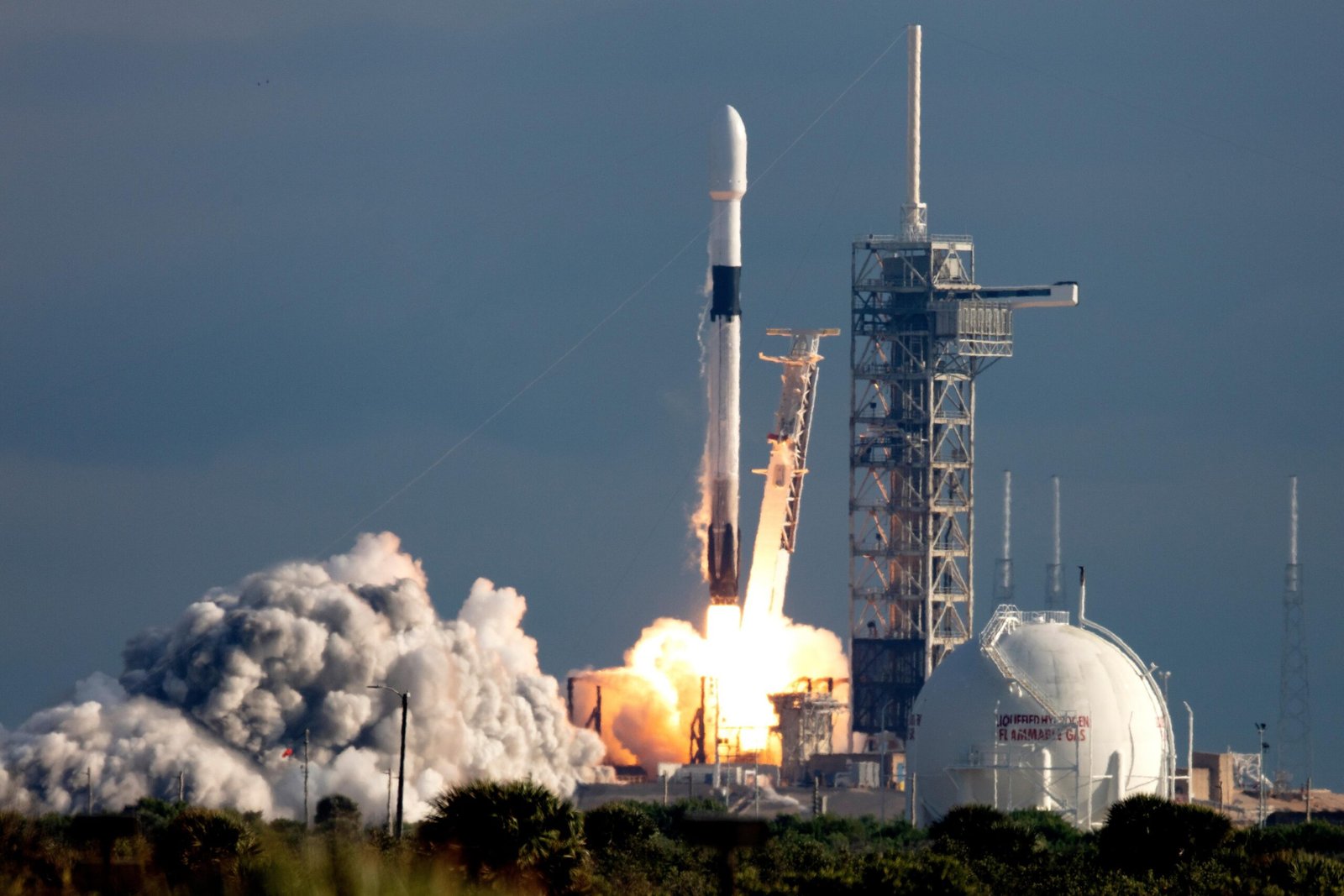
Image source: Getty Images.
Three tests, no exceptions
The consultation behind the decision had proposed shortcuts for megacap companies, such as a seasoning period cut to six months and a waiver of the earnings and float tests. S&P Dow Jones Indices retained all three rules.
A new stock must trade on an eligible exchange for at least 12 months before it can be considered. Its GAAP net income from continuing operations (the unadjusted, bottom-line kind) must be positive in the most recent quarter, and in the four most recent quarters taken together. And at least 10% of a company’s shares must be available to public investors.
SpaceX began trading on June 12, so the seasoning test can’t be met before June 2027. The float test should sort itself out along the way.
Lockup agreements free up shares on a fixed schedule, with about 328 million more becoming eligible to trade on Thursday, Sept. 24, and billions more to come by December. Even CEO Elon Musk, who holds almost half the company, can’t sell before next June.
The profitability test is the tough one
SpaceX now fails both parts of the earnings test. It posted a $541 million net loss for the second quarter. And its four most recent reported quarters total a net loss of more than $8 billion.
But the test considers only a rolling four-quarter window. Most of this year’s losses came in the first quarter, when SpaceX lost $4.3 billion — a number that included about $1.5 billion of one-time charges from retiring debt. By June 2027, that quarter will have fallen out of the tested window completely.
The second quarter’s loss, though, will still count. To pass at the earliest eligible date, SpaceX needs the three quarters it reports between now and then to earn more than $541 million combined — and the final one, the first quarter of 2027, must be profitable on its own.
And the company’s heading in that direction. Not only did its loss from operations shrink to just $143 million in the second quarter (compared to $970 million a year earlier and $1.9 billion in the first quarter of 2026), but revenue growth also rose to 92% year over year from the first quarter’s 15%. SpaceX has even posted a profitable year before, making $791 million in 2024.
Added costs keep the losses coming
Still, there’s a reason profits could take longer to arrive. SpaceX’s spending hits the income statement with a lag.
The company put $28.5 billion into capital expenditures in the first half of 2026, most of it on artificial intelligence data centers. A lot of that spending turns into depreciation when the assets are up and running, an expense charged against earnings over the years the equipment remains in service.


Space Exploration Technologies
Today’s Change
(-4.11%) $-6.36
Current Price
$148.36
Key Data Points
Market Cap
Day’s Range
$147.89 – $154.26
52wk Range
$104.83 – $225.64
Volume
60.6M
Avg Vol
94.9M
The charge is rising rapidly. Depreciation and amortization totaled $2.8 billion in the second quarter, up from $2.4 billion in the first and $1.5 billion a year earlier. And the equipment bought this year will probably drive it higher still. Interest is a growing expense, as well. SpaceX issued $25 billion of bonds in June, and interest expense was $629 million last quarter.
Put another way, the income statement is getting better and taking on new weight at the same time. A company can sit on a $100 billion war chest, as SpaceX did at midyear, and still report GAAP losses for quarters to come.
In the end, the calendar is the easy part. The seasoning requirement ends next June on its own, the float expands on a published schedule, and even a company that passes every test still needs the index committee to select it.
The earnings requirement is the one without a deadline. If you own the stock in hopes of forced index buying, I think quarterly net income, not June 2027, is the number to watch. And at about $152 per share as of this writing, I wouldn’t buy shares simply to wait for it.